Case Studies
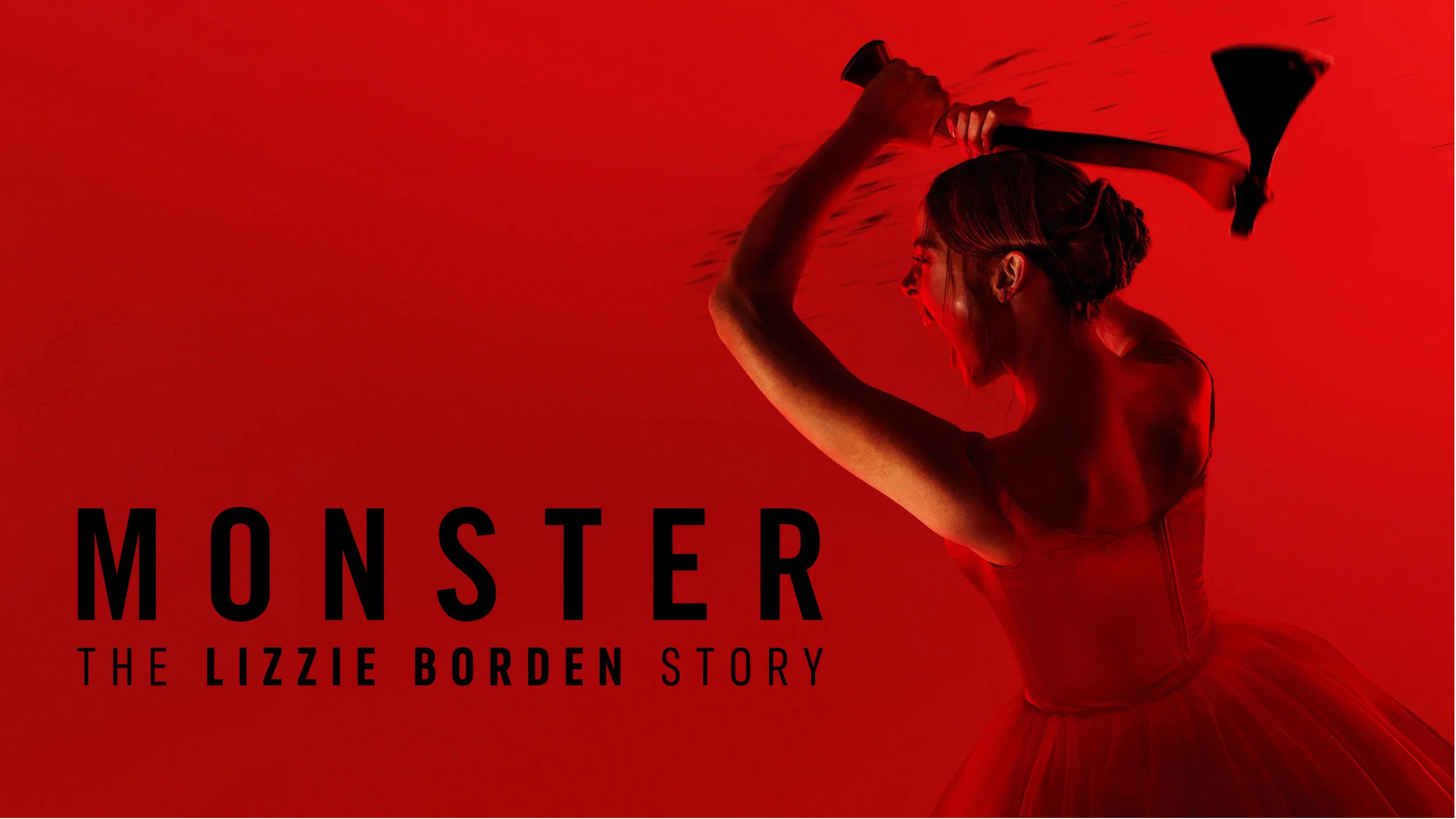
Virtual Pre-Production for Netflix's Monster: The Lizzie Borden Story.
Reality capture let Netflix's Monster scout 35 Italian locations in four days with PortalCam, then plan shots remotely through virtual scouting of 3DGS scans.
A one-hour Lixel K1 scan of six Culver City blocks gave a generative film pipeline the fixed geometry it needed to keep six locations consistent.
How a one-hour 3D scan of Culver City kept six locations consistent through a generative pipeline
| Culver City location capture | |
| Studio | VPX Lab, Los Angeles |
| Lead | Conrad Curtis, DGA Assistant Director; Production and Partnerships Lead, Beeble |
| Location | Six blocks of downtown Culver City, California |
| Device | Lixel K1 |
| Capture time | One hour, on foot |
| Processing | LCC Studio, local, same day |
| Downstream | Terra (District Cinema) for blocking and framing; Beeble Canvas and SwitchX for reference generation and relighting |
| Output format | LCC2 |
Generative video tools do not contain consistent measurements on their own. Run the same prompt twice and the output drifts. The output does not necessarily correspond to a measurement of the actual street, so between generations the doorway shifts, the signage changes, the street widens. Curtis calls this hallucination and identity drift, which breaks a viewer's belief in what they are seeing. A single image can be immune to this. But across a sequence of shots, the drift becomes much harder to hide: each shot must remain consistent with the others and collectively preserve a coherent representation of the same place.
3D Gaussian Splatting offers a way around it, representing a real place as millions of overlapping translucent ellipsoids, rendered in real time and reconstructed from sensor data rather than modeled by hand. An XGRIDS capture pairs that appearance with LiDAR geometry, so the file carries both what a location looks like and where its surfaces sit in relation to one another.
Conrad Curtis spent fifteen years as an assistant director before founding the VPX Lab, a production R&D space in Los Angeles where filmmakers can test new tools without a shoot day riding on the outcome. In June 2026 he took a Lixel K1 into downtown Culver City to see what an hour of scanning could give a production team that a day of location photography could not.
The capture covered six blocks of downtown Culver City, with extra attention paid to the landmarks Conrad expected to build shots around: the exterior of City Hall, the Kirk Douglas Theatre, the Culver Hotel, and the fire station. He processed it locally in LCC Studio the same day, on an HP Omen 45L sitting on his desk, and was already experimenting with the results in the cloud that evening.
He used the Lixel K1 because he wanted concrete geometry with measurable data, knowing that visual fidelity would come later through the generative workflow in Beeble. What the capture had to get right was the geometry of the street, with enough of the Gaussian view to frame a shot inside it. How the location would eventually look on screen was a question for Beeble Canvas.
Curtis took views from six of those locations into Beeble Canvas and restyled them together. The images came back sharper and warmer, lit like late afternoon rather than flat midday, with practicals burning in the theater marquee and long shadows across the hotel forecourt.
.png)
.png)
What did not change was the place.
"I brought these images into the Beeble canvas and was able to restyle them and kind of improve the quality and fidelity of those images, in order to get something that was a more suitable background reference, but still totally true to form for the actual physical location. Signs, text, you know, small detailed lights, all of that stayed the same, the windows."
Every architectural detail that would betray a substitution held its position across all six. The generative pass had something to work against, and what it worked against was a measurement of the actual street.
That is what makes the output usable downstream rather than merely attractive.
"That allows me to have the confidence to say that I can set something up and I know it will be consistent from my planning phase through my delivery phase."
For the fire station scene, Curtis loaded the scan into Terra, District Cinema's browser-based 3DGS platform, and dropped rough proxy geometry from Sketchfab into the scanned street to stand up the set.
.png)
He moved the camera until he found a wide shot that gave him the context he wanted, with the sign, the truck, and the windows all sitting where they sit in Culver City. That framing went into Beeble Canvas, where he generated references the way a director works through storyboards, and those became the frames the team shot against. Source plates were captured on location and brought together with the references in SwitchX, with a costume change handled in the same pass.
.png)
Asked afterward what the scan let him attempt that photographs would not have, he kept the claim narrow.
"I could have used photographic plates of the location, but understanding how the Fire Truck is blocked in relation to the composition would have been more difficult without the 3D."
Plates hand you the location from wherever the scout happened to be standing. Working from the capture, he chose the camera position weeks later, with the geometry of the street holding the composition in place while he did it.
Curtis works at Beeble as well as VPX Lab, which puts him close to what happens when generative tools run without one.
"Often, when left to generative models alone, hallucinations and identity drift can quickly break the viewer's belief in the realism of an output. However, when a ground truth scan anchors a scene, it becomes easier to reduce this."
The payoff shows up long before post.
"Having the ability to explore a realistic version of a location gives the Director and DP the most precious time on location: time to figure things out. Without the ground truth capture, everything is an idea that needs to be validated on set, which often leads to a compromised vision, especially on lower-budget productions."
Conrad's benchmark is his own earlier work. A location scout traditionally returns from a site with hundreds of stills, which he notes "can be difficult to interpret spatially, particularly when trying to understand factors like orientation and sun paths." His first pre-production location scan, in 2022, covered a remote site in Mexico where a film was set almost entirely on location. Two people spent a full week scanning it, and the production received a point cloud and a set of 360-degree images.
The material was useful, but "the outputs required specialist tools and expertise, so the workflow was largely accessible only to VFX teams."
Four years later the Culver City capture stayed with him from the walk to the framed shot. He scanned the blocks himself in an hour, processed the file on the desktop in his own office, built the scene and framed the wide in Terra, and carried those views into Beeble Canvas. He is an assistant director by trade, and the material reached him while the shot decisions were still open.
The lesson from the walk itself is that coverage tracks the route. Curtis moved quickly through some street sections, and those came back thinner than the landmarks he lingered on. He would like scanned material to combine more easily with mapping data to fill those gaps, which "would significantly improve the parts of the street sections I just quickly passed by and didn't focus on." For a scout capture, it is a fair trade, and a useful thing to know when deciding where to spend the hour.
Beeble rebuilt its Unreal Engine plugin earlier in 2026, and Curtis points to it pairing with the XGRIDS LCC plugin as a sign of where these pipelines are heading.
"At Beeble, we are excited to implement partner nodes that enable users to use 3DGS outputs directly in the canvas, connecting accounts from tools like Terra and leveraging Beeble's generative stack to maximize their creative potential."
A measured record of a real place, captured by sensors rather than generated or estimated. Generative tools work from whatever reference they are given, so a scan of the actual location gives the output something fixed to stay consistent with across shots.
Yes. In this project, views taken from a single scan were restyled in a generative tool and came back with new lighting while signage, windows, and architectural detail stayed as captured.
Yes. This capture covered six blocks of downtown Culver City in an hour and was processed on a desktop the same day, then used for shot blocking, production planning and storyboard generation ahead of the shoot.
Six blocks took an hour of walking, with processing running locally the same day. What determines the timeline is how much attention each section gets on the walk.
A point cloud records where surfaces are. A Gaussian splat also records how they look, rendered in real time. An XGRIDS capture with a Lixel device produces both, so a scene can be measured as well as viewed from any position.
Not for prep work. On this project, the assistant director captured the location, processed it on his own desktop, and framed shots in a browser during pre-production.
Yes. Here the capture was framed as a shot in a browser-based 3DGS platform, and the resulting view became the starting point for storyboard iterations in Beeble Canvas.
Reality capture let Netflix's Monster scout 35 Italian locations in four days with PortalCam, then plan shots remotely through virtual scouting of 3DGS scans.
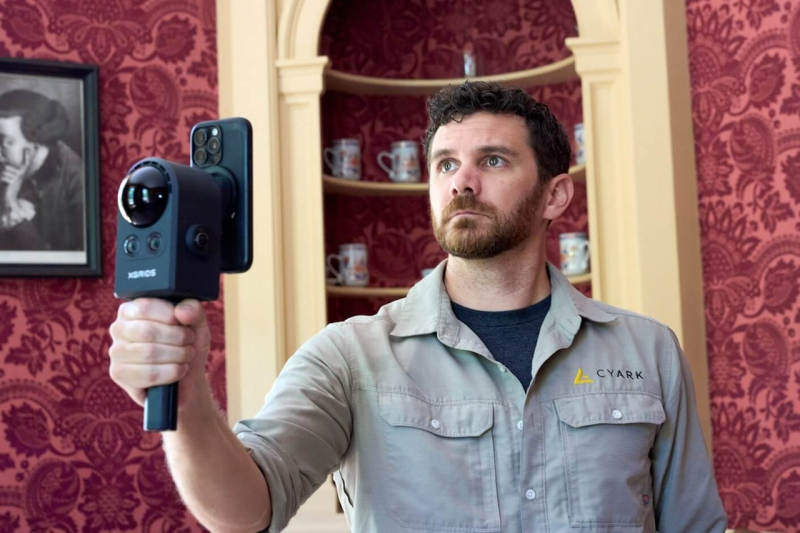
Handheld 3DGS by PortalCam helped CyArk document three landmark interiors for America 250, solving mirror reflections and low-light field challenges.
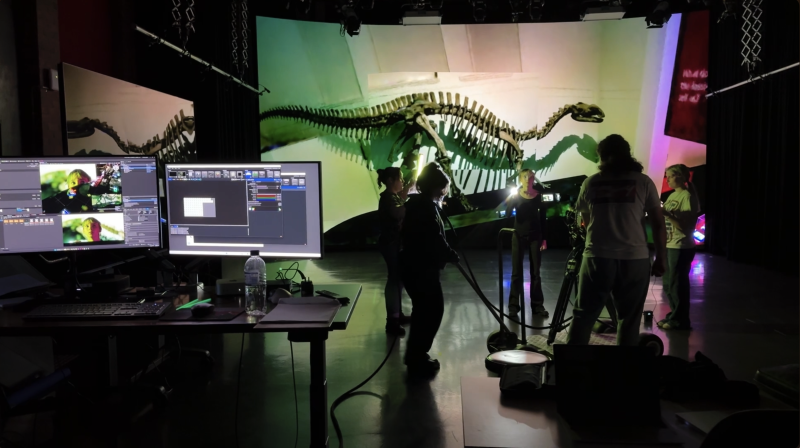
Handheld 3D capture brings real museum spaces to LED volumes, replacing green screens and photogrammetry for fast, cinematic virtual camera moves.
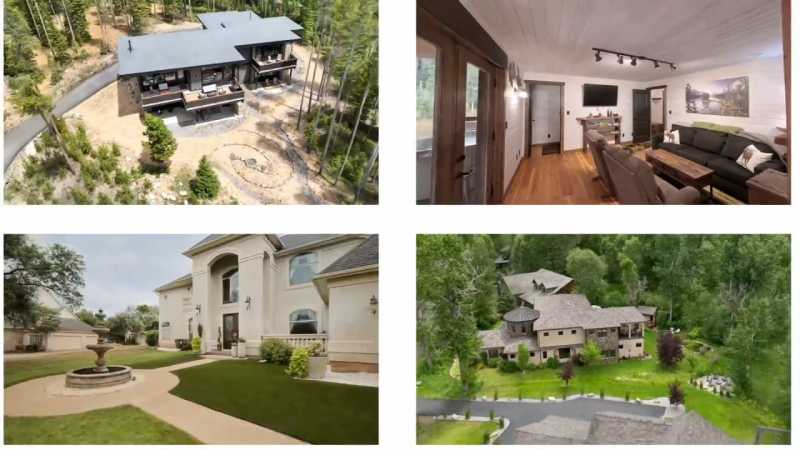
Cut property capture costs by up to 90% using 3D Gaussian splatting to deliver photorealistic browser-based spatial tours for real estate and hospitality.