Virtual Location Scouting and Previs for the Long Take in Cannes Prize Winner Resurrection
Case Studies8 min read
On Resurrection, winner of the Special Prize at the 78th Cannes Film Festival, Bi Gan's crew used virtual location scouting to plan the film's single-take finale inside 3D scans of locations three hours from base.
Film
Resurrection, written and directed by Bi Gan
Recognition
Special Prize, 78th Cannes Film Festival (Main Competition)
Director of photography
Dong Jingsong
Locations captured
A temple and a riverside wharf, about 50,000 m² in three days
XGRIDS hardware
Lixel L2 Pro (Large-Scale Spatial Scanner)
XGRIDS software
LCC Studio; LCC plugin for Unreal Engine
Used for
Virtual scouting, previsualization, VFX shot planning and asset reference
In a world where humanity has lost the ability to dream, Resurrection follows a dreamer through a series of visions that move across time, memory and different eras of cinema. Written and directed by Bi Gan, the film unfolds across multiple chapters, culminating in a single take that runs for more than half an hour.
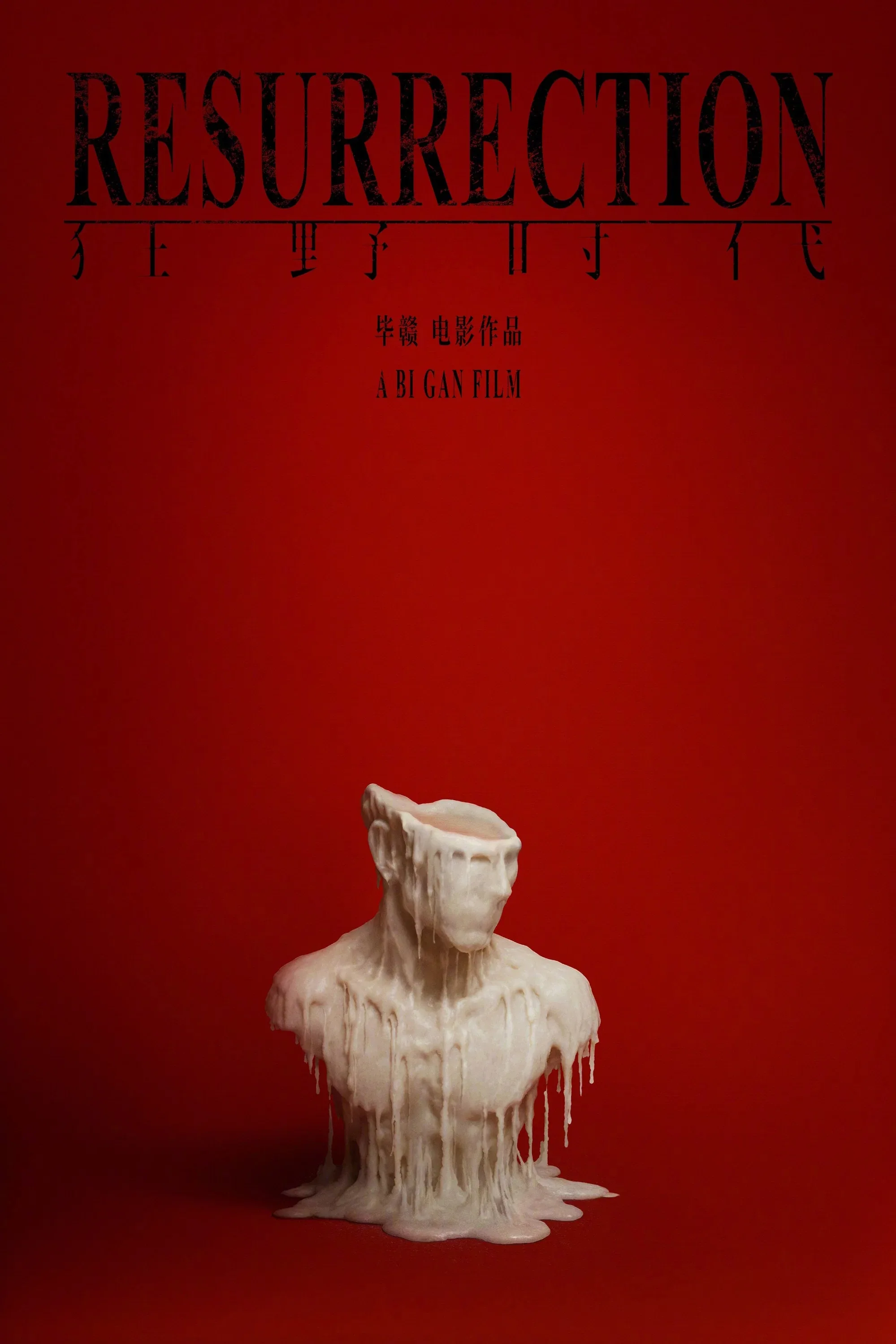
Resurrection film poster by Bi Gan with a melting white wax bust on a red background
One attempt per night
In the film’s final chapter, the camera follows its two leads through a rain-soaked city on New Year’s Eve 1999, moving through narrow streets, interiors and alleys before reaching a riverside wharf. Bi Gan said the shot took about a month, including preparation and rehearsal, and that in the final week the crew made one attempt per night so the take could end on a real sunrise.
A schedule like that left little room to solve problems on set. Blocking, set dressing, camera path and lighting all had to be worked out before the first attempt, and they had to fit together across every space the shot passed through. For director Bi Gan, director of photography Dong Jinsong, and the art, lighting and VFX teams, that meant becoming intimately familiar with locations up to three hours from base—often without being able to visit them in person.
Real locations, three hours away
The look of Resurrection is built on real sites, many of them modified on location. "Authentic locations are a cornerstone of our project's aesthetic," Bi Gan says. "Everything must be grounded in physical reality, which naturally demands a massive amount of labor and time for scouting."
The crew was based between several filming locations, which left some of them a long drive away. A trip to the temple used in the film's taste chapter took around three hours each way, and every visit required the production team to check safety and coordinate access with the people managing the site. During prep, Bi Gan noticed his meetings with the DP and art department were losing hours to the road. Much of the discussion about a location happened in the car on the way to it.
When the director and DP could not make the trip, the team relied on photos and the art department's descriptions. "Sometimes the director and I can't physically visit; some sites are just too far," Dong Jingsong says. "When you can't be there and have to rely on photos or verbal descriptions from the art department, it's hard to get a genuine feel for the space."
Bringing the location back to the office
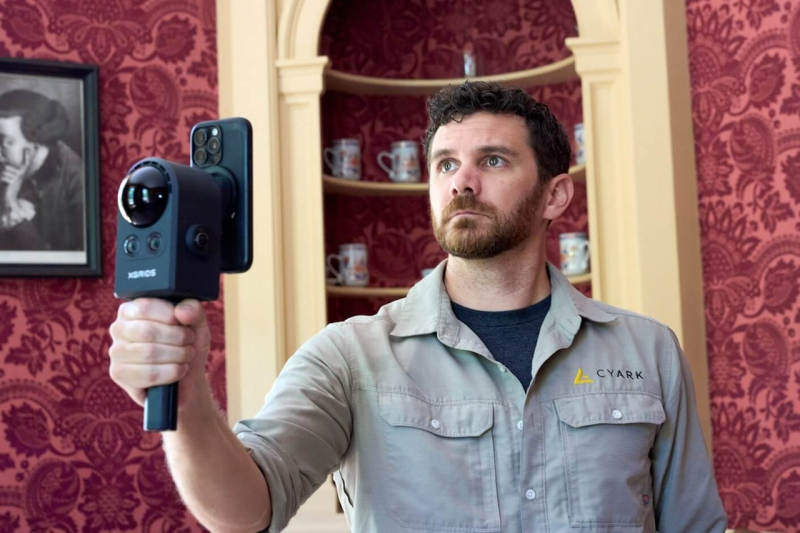
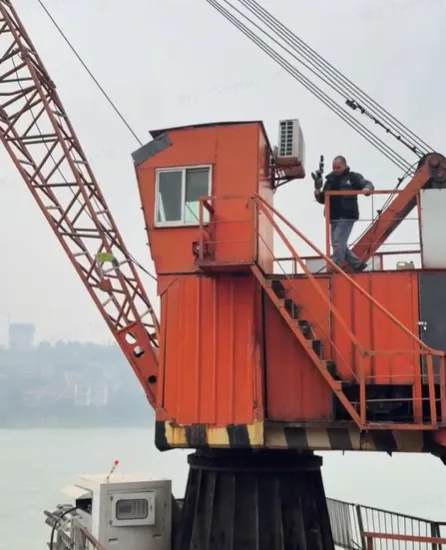
XGRIDS supported the production with on-site capture and 3D reconstruction. A conventional scout usually needs several specialists on location at the same time. In place of department heads, the production sent a small team, where the scanner operator did not need a technical background or extensive knowledge of camera language or shooting. After a short training session from XGRIDS, the operator’s job was to walk each site with a handheld Lixel L2 Pro. In three days, the team captured the temple and the riverside wharf, about 50,000 square meters in total. “The equipment is simple for us to use,” Bi Gan says. “It doesn’t take complicated training.”
Operator holding a Lixel L2 Pro scanner on a crane platform at the riverside wharf location
Lixel L2 Pro in action for location scouting
Back at base, LCC Studio reconstructed the data as 3D Gaussian splatting (3DGS) scenes: photorealistic, free to navigate, and measurable, with relative accuracy of about 1 cm. Because the scenes keep each site's real scale, the director, DP, art department and VFX team could all work from one shared spatial reference.
When it was time for the location meeting, Bi Gan says, the team simply turned on the screen. "We could spend the whole afternoon working through how to shoot the temple. The entire space was right there on our screens. We could move through every corner of it."
Previs for every department in one model
Bi Gan has described his plan for a long take as something that changes every day and lives in conversation with his directing team more than on paper, with assistant directors relaying each change to every department. Using the XGRIDS LCC plugin for Unreal Engine, the team brought the 3DGS scenes into a shared virtual environment for previsualization. Each department could prepare in parallel, then check its plan against everyone else's.
Direction. The director worked through staging inside the scene, walking the route to see how actors would move from one space to the next.
Art department. The art team removed structures they did not need, imported designed 3D set pieces and previewed the dressed set in real time. When a real prop or set element on location looked right, they captured it and cropped it out of the scan as a photorealistic asset that could be placed in any scene. That bypassed the usual pipeline of manual modeling, retopology, UV mapping and texture painting, which can take days per asset and a specialist artist to complete.
Lighting. The lighting team placed virtual light sources in the scene to test fixture positions and preview how light would fall, before any fixtures arrived on location.
Camera. The camera team set shot positions and mapped camera paths inside the 3D space with centimeter-level spatial accuracy.
With each plan in place, the departments reviewed them together in the same scene, running blocking, dressing, camera movement and lighting as one rehearsal.
Rehearsing the long take
For Dong Jinsong, the value of the scene was geography. The long take moves through several zones, which the crew referred to as positions A, B, C and D. "It gives you a real sense of the geography," he says. "For a long take moving through points A, B, C and D, walking through it virtually lets you feel how the space changes and exactly how much physical time it takes to move from one section to the next."
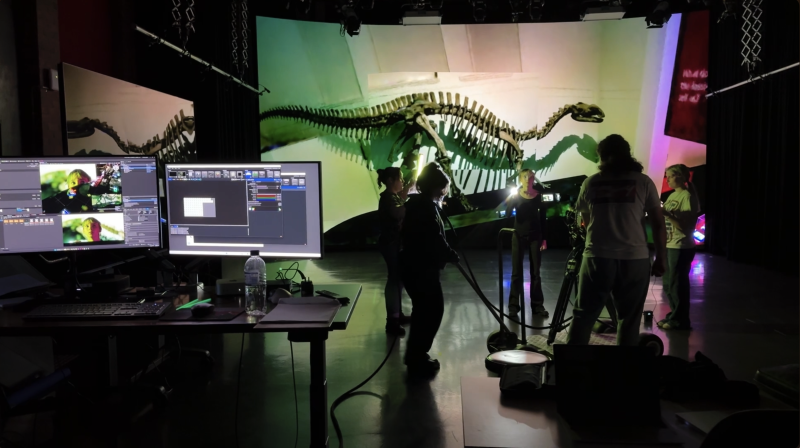
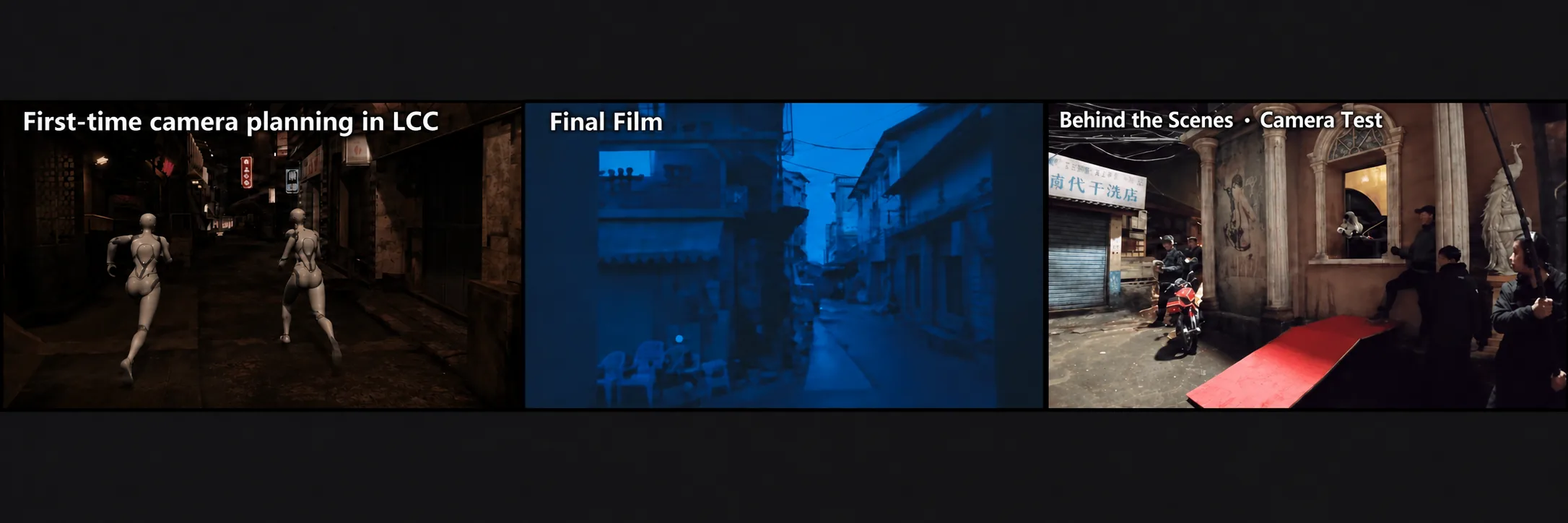
Camera blocking in an LCC 3DGS alley scene with mannequins, next to the final film frame and an on-set camera test
In a narrow alley, a camera move that has not been checked can stop a take. Inside the model, the team verified crane clearance, dolly track runs and actor blocking against the real dimensions of the space before the shoot. On a production that's limited to one attempt per night, every hour not spent repositioning equipment went back to the shot itself.
Using 3DGS scan data for VFX shot planning
The same captures fed VFX planning. "It offers the creative team a novel, immersive scouting experience that is incredibly efficient," says VFX supervisor Song Liu.
In the temple, a water trough in the courtyard reflects the surrounding buildings. With the temple scene open in post-production software, the VFX team measured the spatial relationship between the water surface and the architecture, worked out the reflection angles in advance, and used them to find the camera position and composition for the shot.
At the wharf, which needed a partial 3D rebuild, the team imported the scan into their VFX software as reference for reconstructing the dock as a 3D asset. Modeling from photos usually means building from reference views, guessing at complex structures and leaving occluded areas to interpretation. With the scan as a base, the team could work from measured geometry and reduce error. The supervisor also points to the value of the data as reference for matchmoving and object tracking.
Capture time mattered as much as accuracy. "We don't need to set up multiple stations and scan each one for a long time. We just walk the site with the device a couple of times," he says. "Work that would usually take us a full day can often be done in an hour or two."
Staying close to the real location
The VFX team is already looking at further uses: 3DGS assets for mid- and far-ground set extensions in high-end features in place of conventional CG builds, scans as the base layer for concept art and storyboards, and captured scenes as assets for virtual production and techvis in Unreal Engine.
For Bi Gan, the case for spatial capture is about which locations a film can afford to keep. "Normally, when a place is too far, too remote or too hard to coordinate, we give up the real location and build a set on a stage. But a perfect real location is something a stage set can't replace. With XGRIDS equipment, we can stay connected to real locations," he says. "It makes our filmmaking more data-driven and gives us more control, and at the same time, paradoxically, it brings us closer to reality."
The time saved on the road, he adds, went back into the film. "It's not just an efficiency gain. It's a creative outcome. All that time saved goes back into the work itself."
.png?x-oss-process=image/resize,w_800/quality,Q_50)