
News
LCC2: The Open Format for the 3D Gaussian Ecosystem
An open format that more tools, more industries, and more developers can build on.
XGRIDS PortalCam Becomes Only Product to Win Four Categories at 2026 NAB Show Product of the Year Awards
PortalCam sweeps four 2026 NAB Show Product of the Year categories as 3D Gaussian Splatting enters film and broadcast production.
LAS VEGAS — April 23, 2026 — Spatial intelligence company XGRIDS has been named a winner in four categories at the 2026 NAB Show Product of the Year Awards, announced April 22 at the Las Vegas Convention Center. Its spatial camera, PortalCam, was recognized in Cameras, Graphics/VFX/Switchers, Intelligent Technology, and Remote/Live Production — the only product in the program's eight-year history to be named in four categories in a single year.
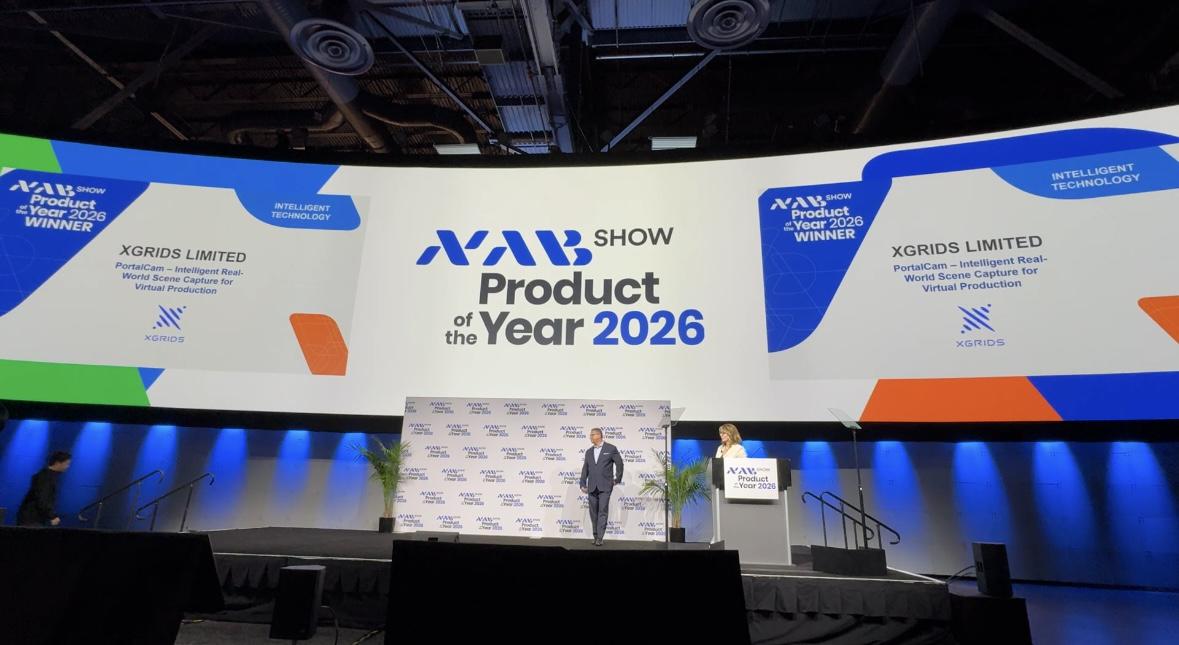
The sweep across four distinct stages of content production — acquisition, post, AI-driven capture, and live workflows — signals that judges saw PortalCam not as a point solution, but as a capture layer applicable across the full production pipeline.
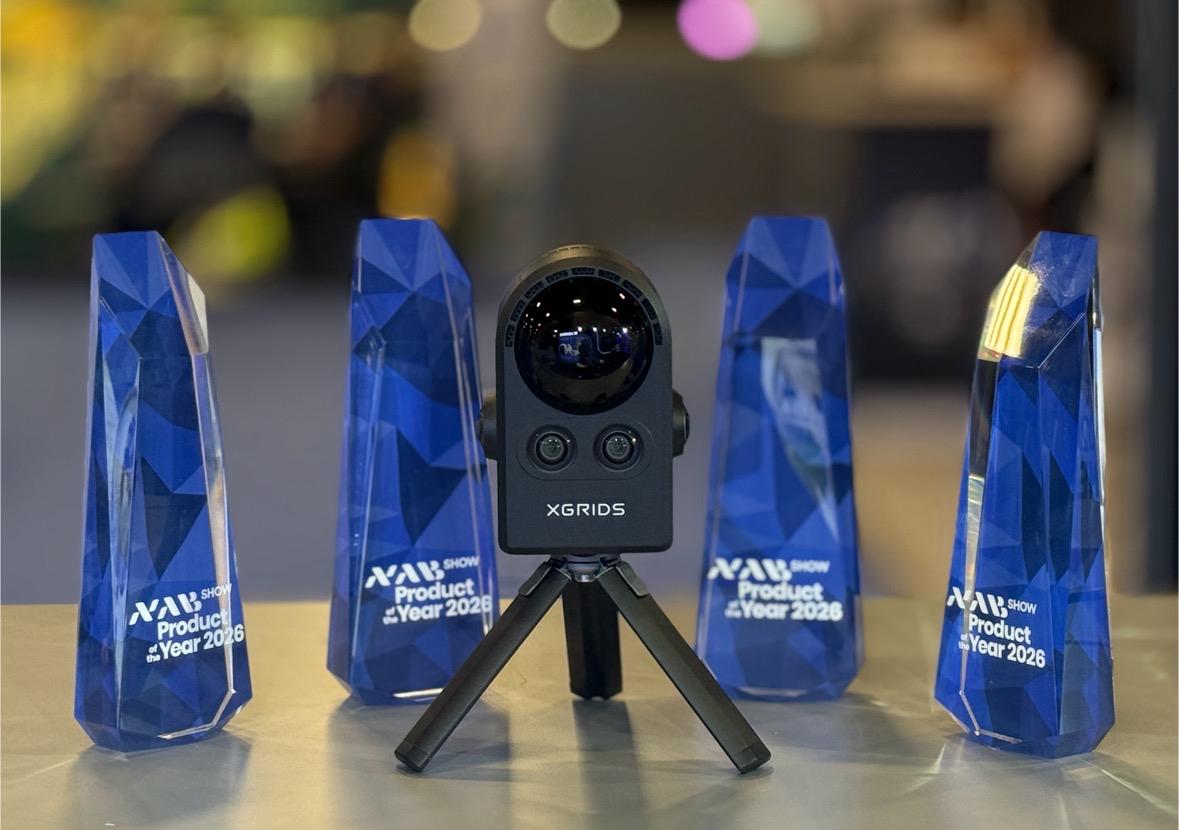
PortalCam fuses LiDAR with a multi-camera array to capture real-world environments as 3D Gaussian Splats — a rendering technique that produces photorealistic, navigable scenes from a single walk-through. LiDAR anchors the capture in accurate, measurable geometry, preserving real-world scale and spatial relationships; the camera array layers in photographic detail and lighting. The result is a 3D environment that faithfully duplicates the original location while providing dimensions accurate enough for production planning, LED volume projection, VFX integration, and other applications where measurements matter. It's the same class of camera-and-LiDAR capture powering NVIDIA's Omniverse NuRec and Isaac Sim workflows for Physical AI training.

An operator scans a location in minutes; the output flows into XGRIDS' LCC Studio software and emerges as a photorealistic 3D environment ready to be lit, edited, projected onto an LED volume, or shipped into Unreal Engine.
Pre-production becomes reusable. Location scouts stop being one-shot visits and become reusable digital assets that directors, DPs, and production designers can re-enter remotely, across time zones, without a second trip.
Production decouples from physical location. Virtual production stages can pull from a library of real-world environments captured at fidelity indistinguishable from live plates, without the set construction or CGI reconstruction traditionally required.
Post-production preserves context instead of rebuilding it. VFX teams work from complete spatial data at the source, rather than reverse-engineering scenes from 2D footage.
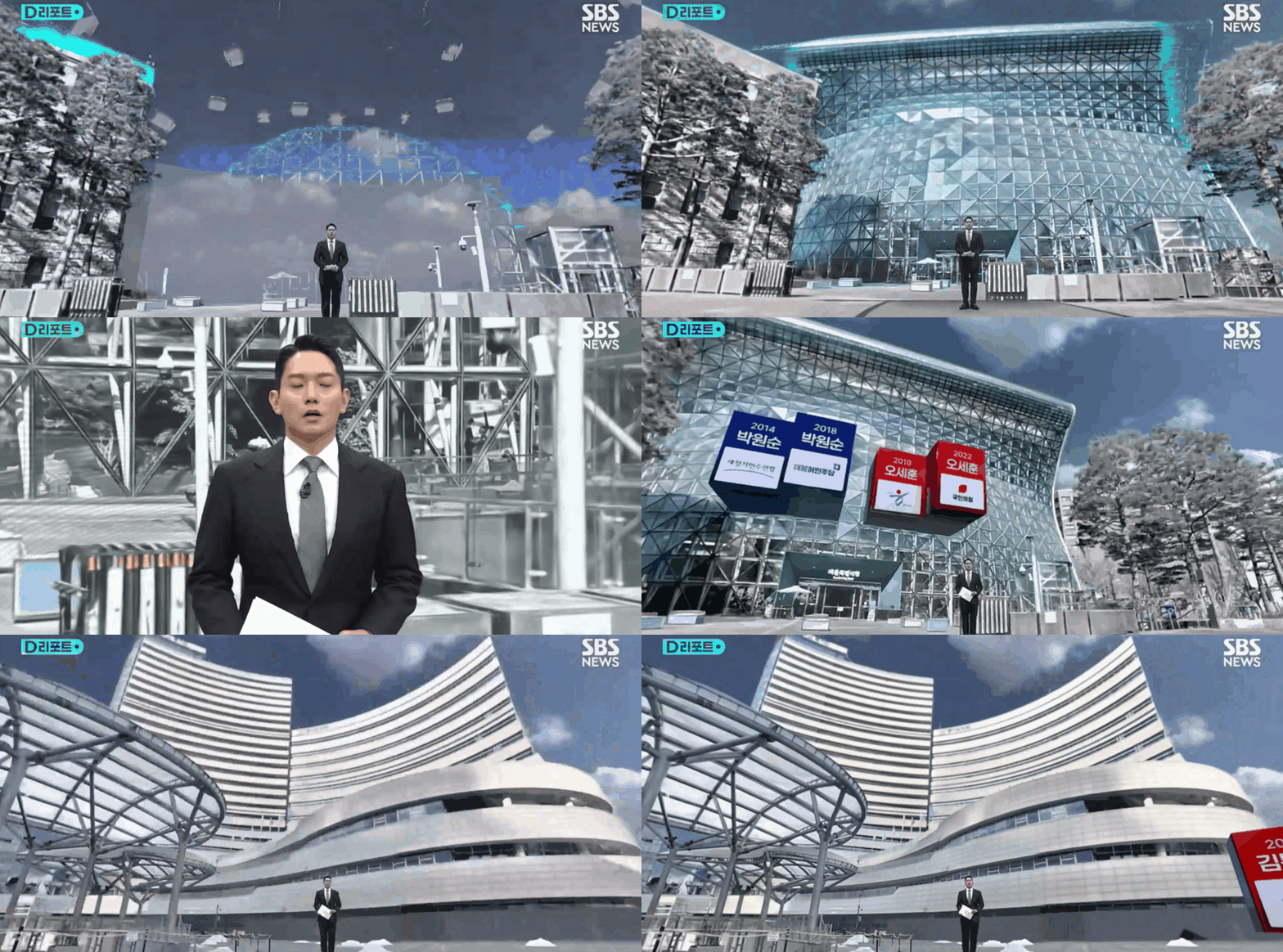
In South Korea, SBS integrated XGRIDS' PortalCam and LCC pipeline into its AIXR Studio, becoming the first broadcaster to combine 3DGS environments with XR workflows for live news production. The system lets anchors move between photorealistic virtual environments captured from real locations.
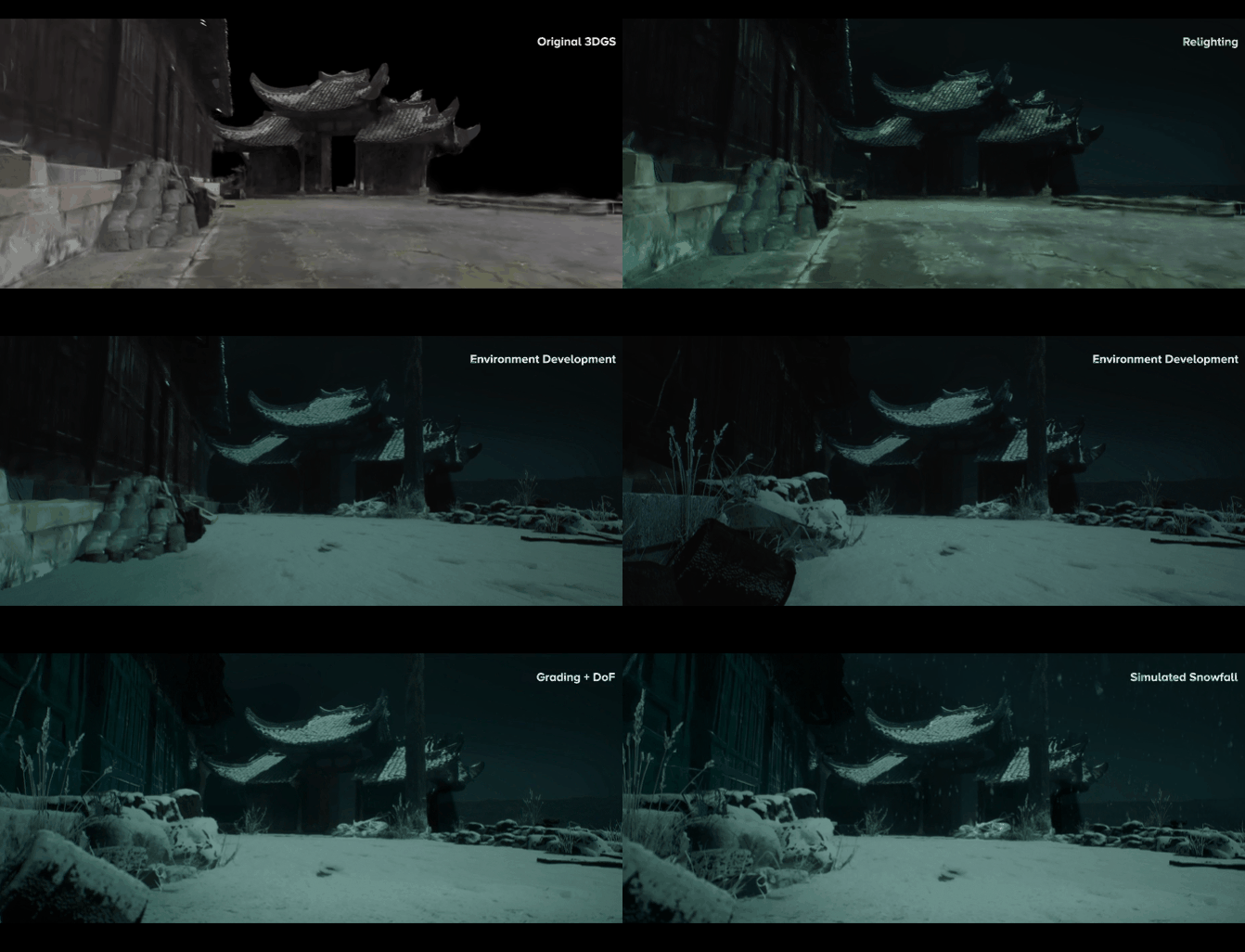
For the feature film Resurrection (狂野时代), XGRIDS' capture pipeline was used for location scouting and virtual set planning, allowing art direction and lighting teams to make decisions inside the digital twin of a location without repeat site visits.
On Apple TV+ series Shrinking, PortalCam was used to pre-capture shooting environments and project them onto LED volumes, enabling actors to perform against photoreal digital sets in real time and reducing downstream compositing.
PortalCam is one entry point into a broader XGRIDS platform designed to make 3D spatial data usable wherever production teams already work. Captures processed through Lixel CyberColor (LCC) Studio can be viewed, navigated, and shared across desktop, web, and mobile — no specialist software required on the receiving end — and exported into Unreal Engine, Unity, USDZ, and standard VFX pipelines. The underlying .lcc format was released as open source in 2025, inviting third-party developers and studios to build directly on the specification rather than around it.
"Four awards across four categories tell us something specific: the industry no longer sees spatial capture as a single tool for a single stage. It's becoming infrastructure for how content is made. That's the shift we've been building toward," said Sunny Liao, Director of Global Sales & Marketing, XGRIDS.
XGRIDS is building a spatial intelligence platform — bridging the physical and digital worlds to provide the foundational infrastructure for AI to operate in real-world environments. The company converts advanced spatial intelligence research into production-ready products — using spatial perception, 3D reconstruction, and intelligent processing to turn physical environments into spatial data that AI systems can interpret, reason about, and act on.
Media contact:
Mindy Li: xiangxiang.li@xgrids.com
An open format that more tools, more industries, and more developers can build on.
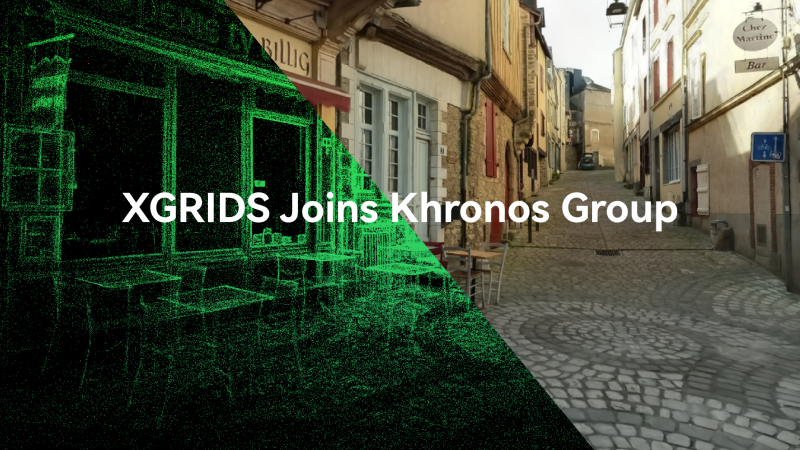
XGRIDS, a spatial intelligence company and one of the first companies to deploy 3D Gaussian Splatting at production scale across multiple industries, today announced its membership in the Khronos® Group.

XGRIDS wins the IFA 2026 Netzwelt Innovation Award with PortalCam & LCC Scan, turning physical spaces into production-ready digital twins in real time.
.PNG?x-oss-process=image/resize,w_800/quality,Q_50)
XGRIDS advances AI spatial understanding at ACM MM 2026 with SpatialGrammar, coupling language models with compiler-driven physical constraint validation.