News
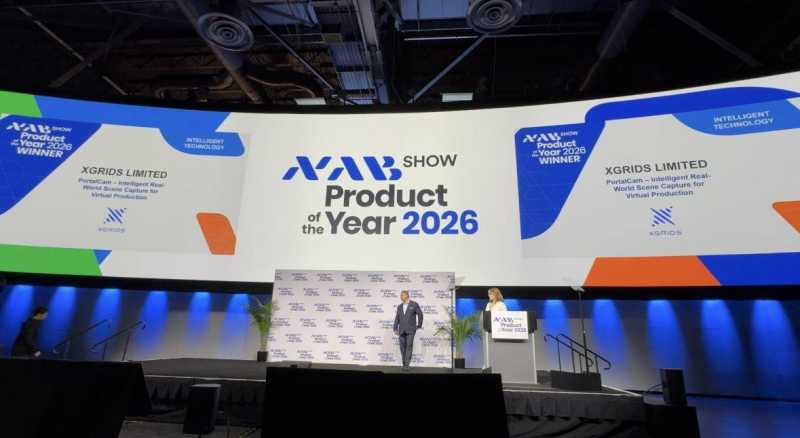
XGRIDS PortalCam Becomes Only Product to Win Four Categories at 2026 NAB Show Product of the Year Awards
XGRIDS PortalCam Becomes Only Product to Win Four Categories at 2026 NAB Show Product of the Year Awards
Lixel CyberColor 2 (LCC 2) is our next-generation 3DGS format — the all-rounder 3DGS format. Smaller files, high-fidelity rendering, reliable mobile and VR performance, full-scenario coverage, and broad ecosystem compatibility, all in one format. 3DGS content that works cross-platform and at scale, without compromise.
3D Gaussian Splatting is becoming the default format for digitizing real-world spaces. But in production, significant barriers remain: large file sizes, unstable mobile loading, and frequent format conversions across platforms.
Lixel CyberColor 2 (LCC 2) is our next-generation 3DGS format — the all-rounder 3DGS format. Smaller files, high-fidelity rendering, reliable mobile and VR performance, full-scenario coverage, and broad ecosystem compatibility, all in one format. 3DGS content that works cross-platform and at scale, without compromise.
LCC 2 Beta is now available.

LCC 2 Beta compresses output to just 18% of the LCC 1 file size and only 8% compared to standard PLY files. This has downstream effects on project delivery, online sharing, backend storage cost, and integration into production pipelines.
Especially in mobile scenarios, lighter files mean lower loading overhead and a more convenient access experience. With LCC 2, scene files that were once too heavy for mobile can now be viewed more smoothly.
As 3D content moves into more collaborative and distribution-heavy contexts, compression is a prerequisite for scale — not a nice-to-have.
Beyond compression, LCC 2 Beta improves first-load speed on web. Users reach viewable content faster, with smoother initial rendering. This means users get to open a file and explore with no buffering wall in between.
If lighter and faster lowers the barrier to using spatial data, stability determines whether the experience holds up.
LCC 2 Beta improves overall display quality and browsing consistency. Known issues from LCC 1 — localized cracks, rendering anomalies at upper floors, incomplete model coverage — have been addressed.
The result is a more intuitive, visually continuous, and complete flythrough experience.


VR amplifies every rendering flaw. Cracks, pop-in, and visual discontinuities that are tolerable on a flat screen become disorienting in a headset.
LCC 2 Beta optimizes for this: more stable frame rendering, improved model completeness, and smoother visual transitions. Users can navigate reconstructed spaces in VR with greater spatial coherence — from passive viewing to active interaction.
Mobile is equally a priority. Beyond the loading benefits of a lighter file format, LCC 2 also optimizes mobile rendering at the engine level — allowing large-scale 3DGS content to render stably and play back smoothly on device.

LCC Studio v1.12 for LCC2 Beta is available now, focused on viewing and spatial experience.
The full release, planned for late May, will add editing capabilities and expanded application support — moving LCC 2 from a viewing format to a working format.
And you can find open sourced LCC2 whitepaper here: https://github.com/xgrids/LCC2Whitepaper
As LCC 2 matures, larger and more complex scenes will be deliverable as compact, high-fidelity digital assets — strengthening the data foundation for spatial intelligence applications across industries.
XGRIDS PortalCam Becomes Only Product to Win Four Categories at 2026 NAB Show Product of the Year Awards
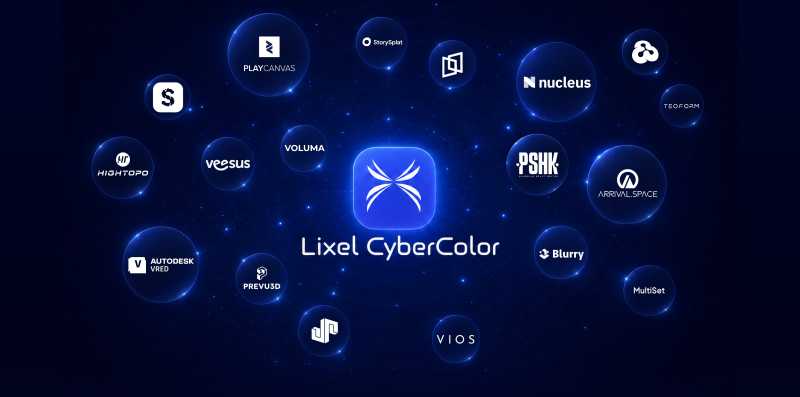
An open format that more tools, more industries, and more developers can build on.
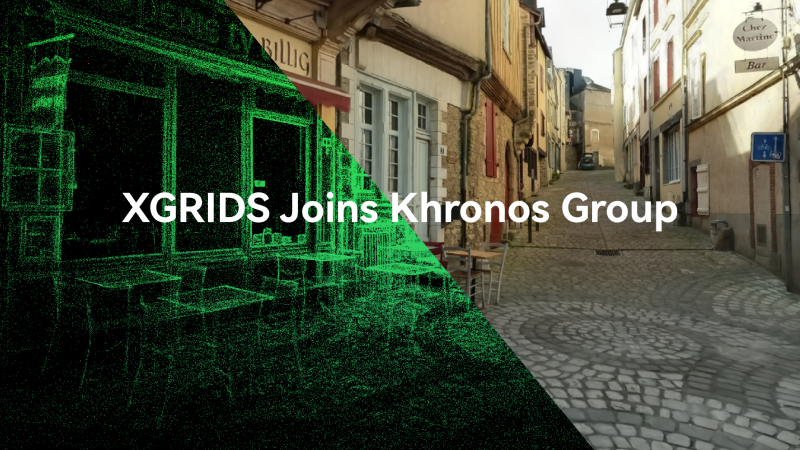
XGRIDS, a spatial intelligence company and one of the first companies to deploy 3D Gaussian Splatting at production scale across multiple industries, today announced its membership in the Khronos® Group.

XGRIDS wins the IFA 2026 Netzwelt Innovation Award with PortalCam & LCC Scan, turning physical spaces into production-ready digital twins in real time.