Case Studies
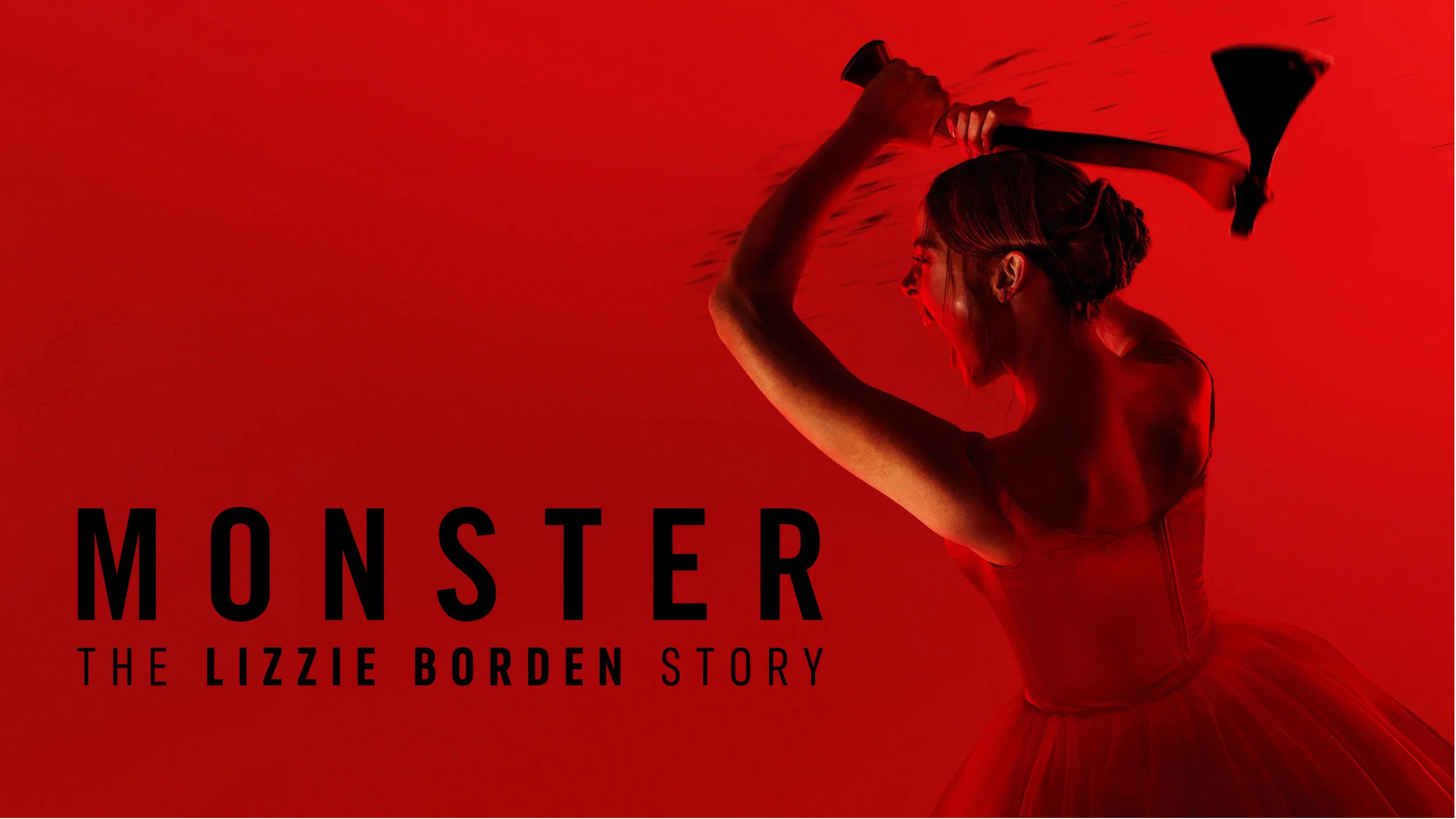
Virtual Pre-Production for Netflix's Monster: The Lizzie Borden Story.
Reality capture let Netflix's Monster scout 35 Italian locations in four days with PortalCam, then plan shots remotely through virtual scouting of 3DGS scans.
Veteran cinematographer Roberto Schaefer's adoption of XGRIDS' 3D Gaussian Splatting technology demonstrates how established professionals can leverage emerging tools to solve persistent industry challenges. Through cultural documentation and international film location scouting, Schaefer validated practical applications that extend beyond typical virtual production use cases.
Featuring: Roberto Schaefer, ASC, AIC
Credits: Finding Neverland, Quantum of Solace, The Kite Runner, Monster's Ball
Veteran cinematographer Roberto Schaefer's adoption of XGRIDS' 3D Gaussian Splatting technology demonstrates how established professionals can leverage emerging tools to solve persistent industry challenges. Through cultural documentation and international film location scouting, Schaefer validated practical applications that extend beyond typical virtual production use cases.
Key Outcomes:
"I have always been interested in new tech and how it can be applied to filmmaking," Schaefer explains, "but only if it is something that can help me in my attempts to express my visual emotions."
The cinematographer faced recurring challenges in traditional production workflows that plague the industry:
These issues became particularly acute during COVID-era restrictions and budget-conscious independent productions.
Schaefer's "ah-ha moment" occurred at NAB 2024 when he encountered Lightcraft JetSet demonstration combined with 3D scanning technology:
"It happened for me at the NAB in 2024 when I saw the Lightcraft booth and the live demo of the Jetset app with a cine camera, an iPhone and the Accsoon device to sync it all up with 3D environments."
The integration potential immediately clicked:
Accurate spatial data + real-time visualization + collaborative access = fundamental workflow transformation.
Objective: Enable remote film planning for locations in Sutri, Italy, reducing costly travel for director Jeffrey DeChausse and creative team.
Challenge Scope:
Technical Implementation:
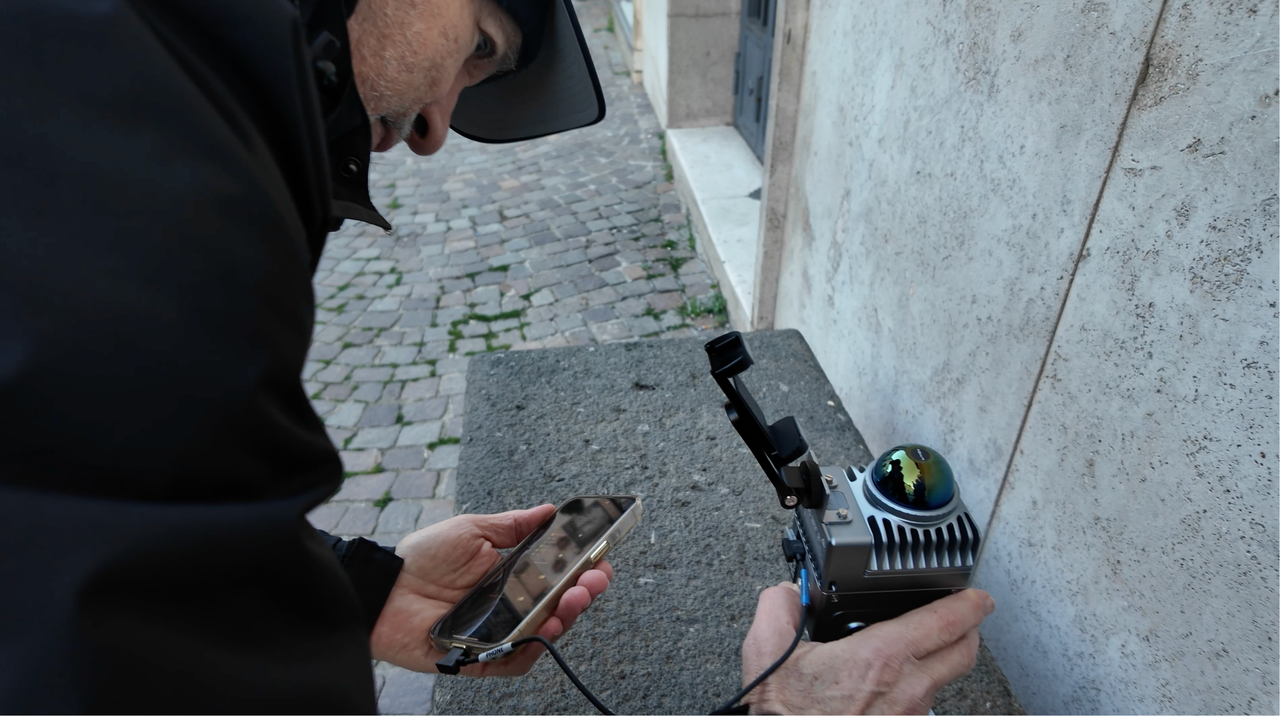
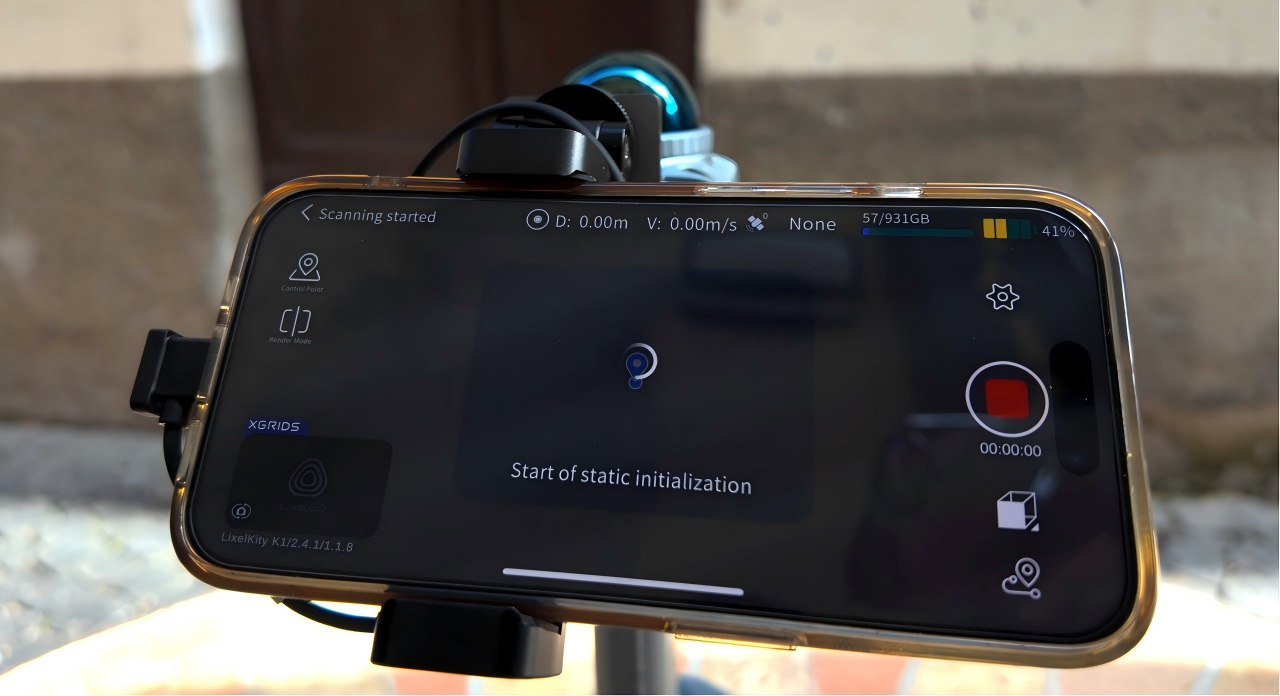
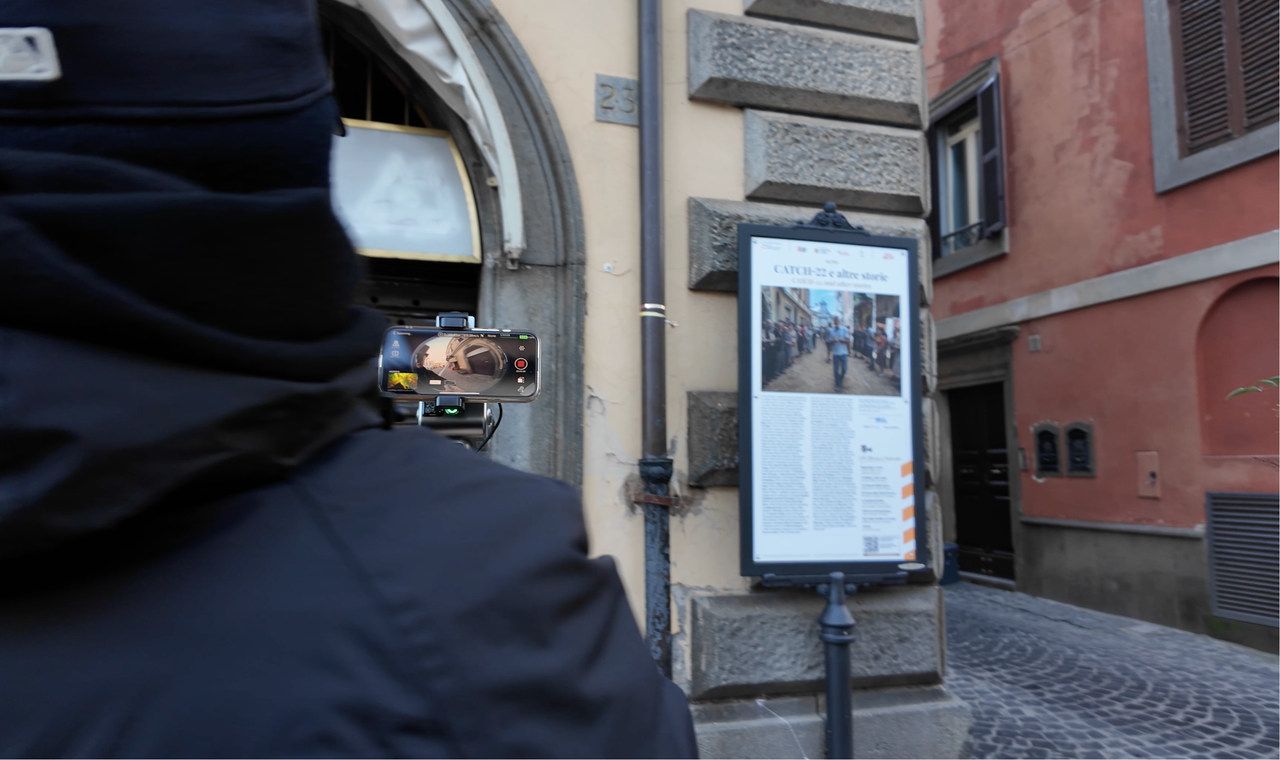
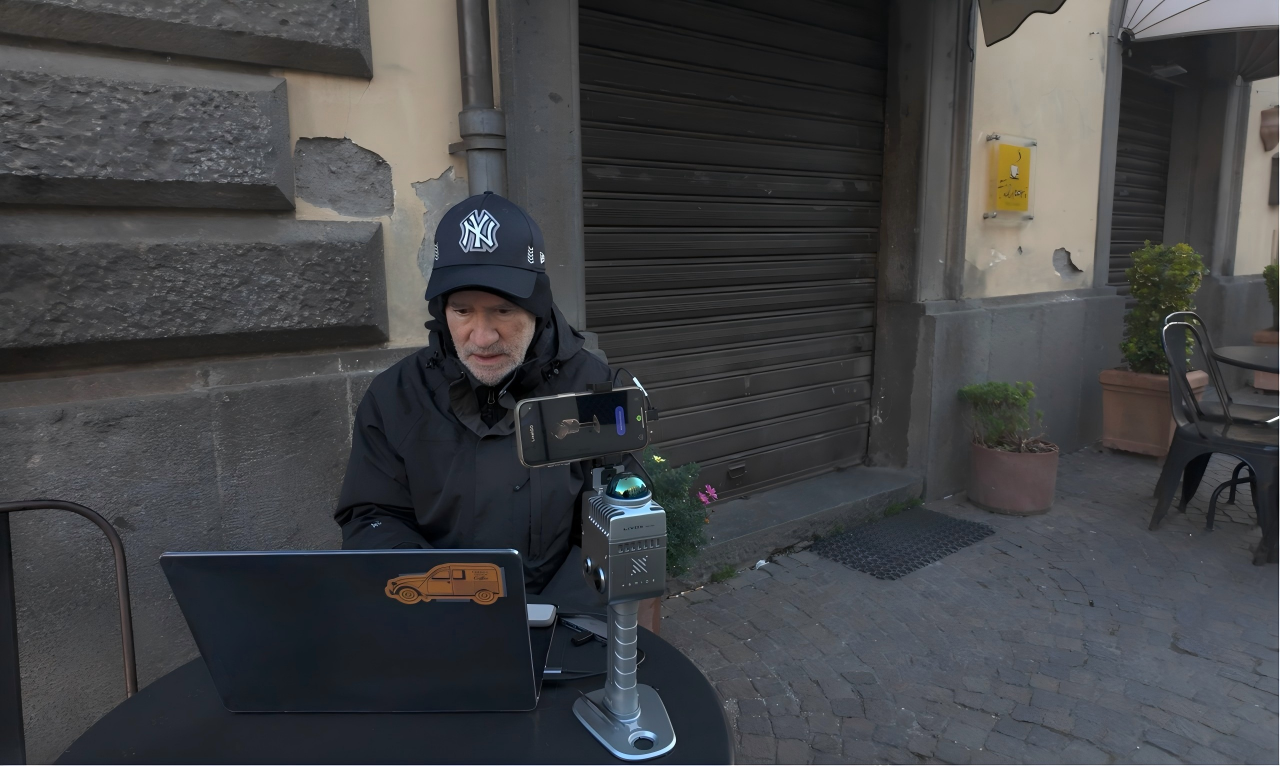
Real-time feedback and mission control from LixelGO.
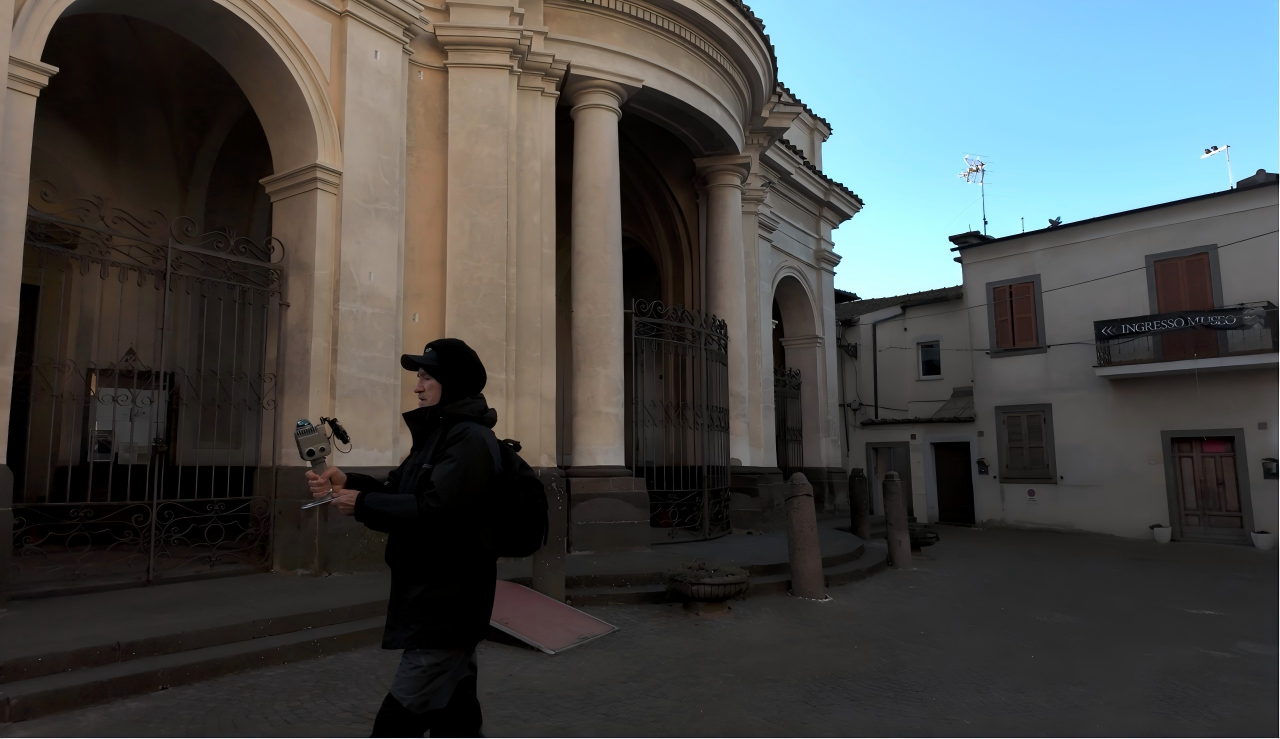
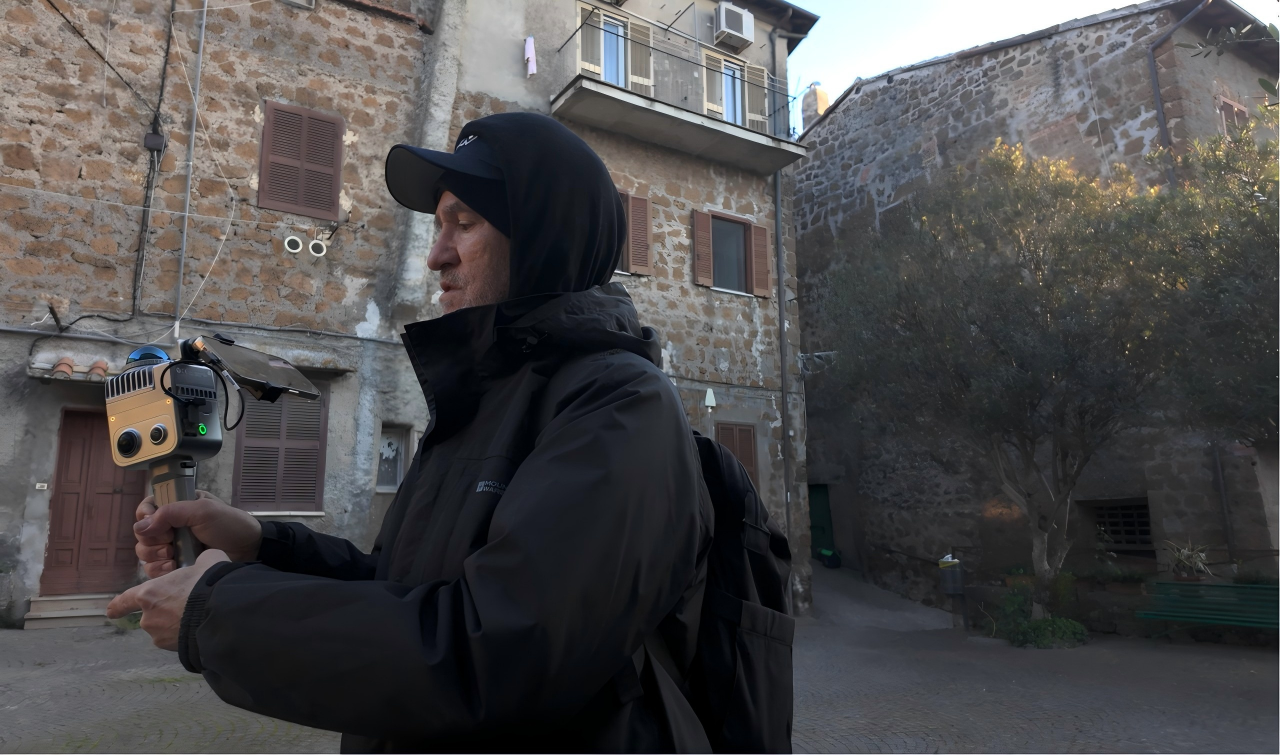
Building Exterior
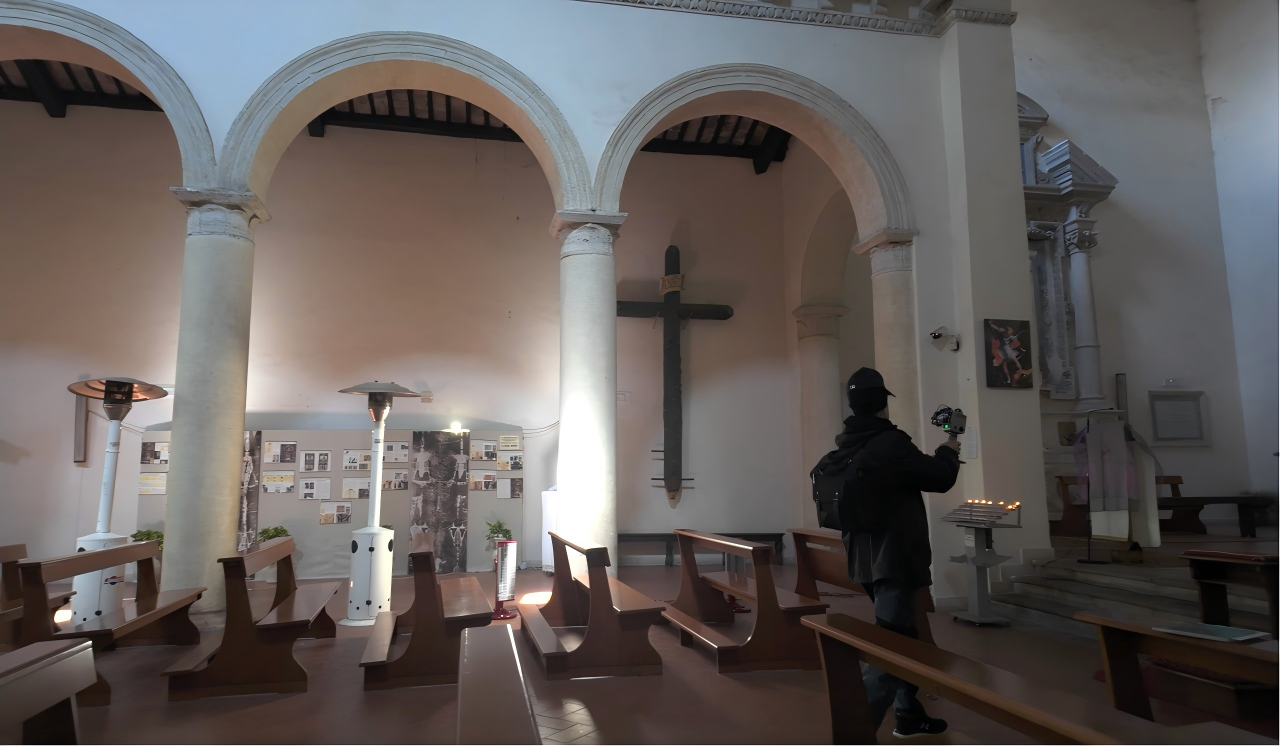
Building Interior
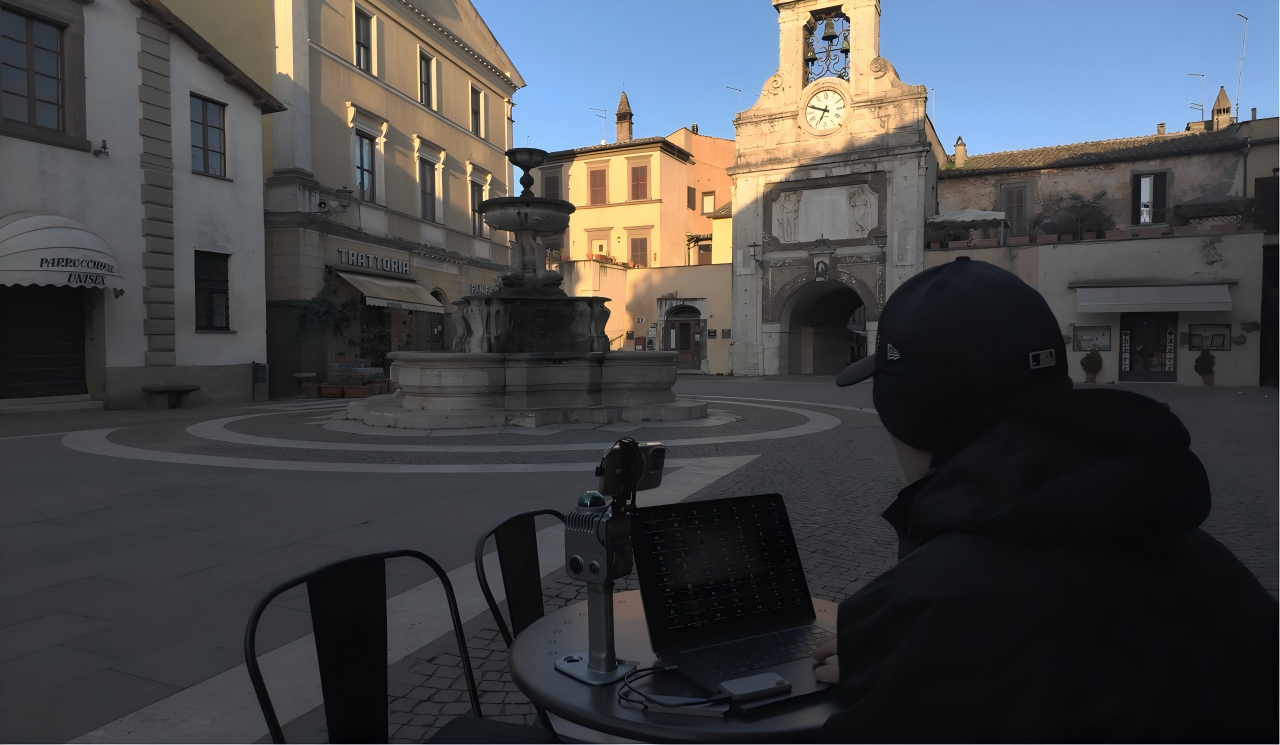
During his two-hour continuous scanning session, the K1's lightweight design proved essential. "It is relatively lightweight and easy to handhold and walk with for extended periods," Schaefer notes, emphasizing how the tool's accessibility allowed him to operate without specialized technical support. The integrated smartphone app provided real-time visual feedback, ensuring comprehensive coverage of each location.
Key Outcomes:
https://lcc-viewer.xgrids.com/?data=https://da9i2vj1xvtoc.cloudfront.net/prdfr/user-pub/18914674/18914674532029764/2283/PzDelDuomoM.lcc
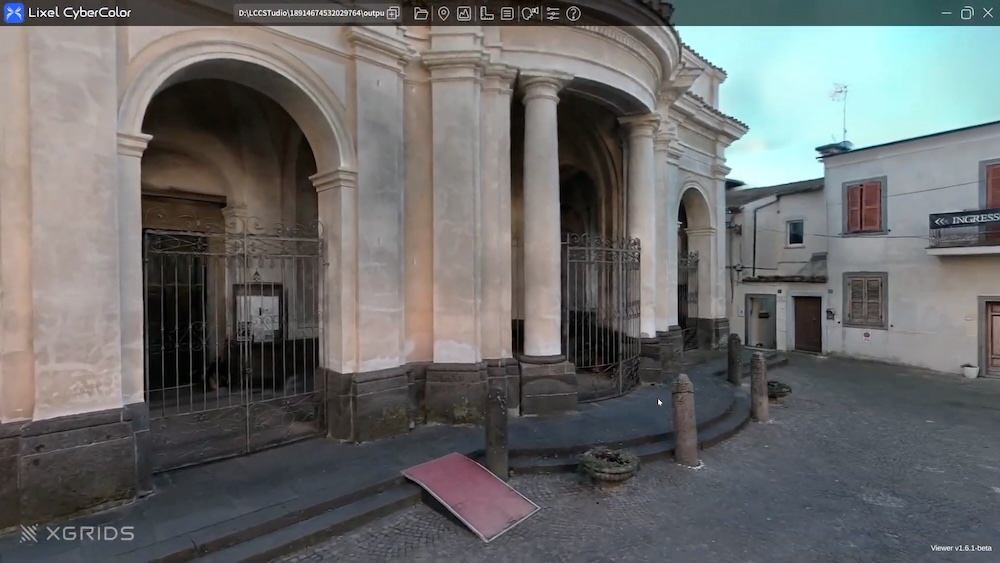
The results exceeded expectations. Schaefer reduced international scouting trips while enabling unlimited virtual location revisits for the creative team. The 2cm accuracy proved sufficient for technical measurements, but more importantly, it created what DeChausse described as remote collaborative planning capability that had the potential to transform their pre-production approach.
Director's Impact: Jeffrey DeChausse, the project's director, experienced the transformation firsthand: "Initially, I was unsure what to expect, but when Roberto showed me the 3D mapping footage, it sparked an instant brainstorming session. It's like arriving at a location already familiar with the space—the lighting, the size, and the exact gear and crew needed."
Objective: Create virtual museum tours of the late science fiction writer's extraordinarily detailed home in Hollywood Hills.
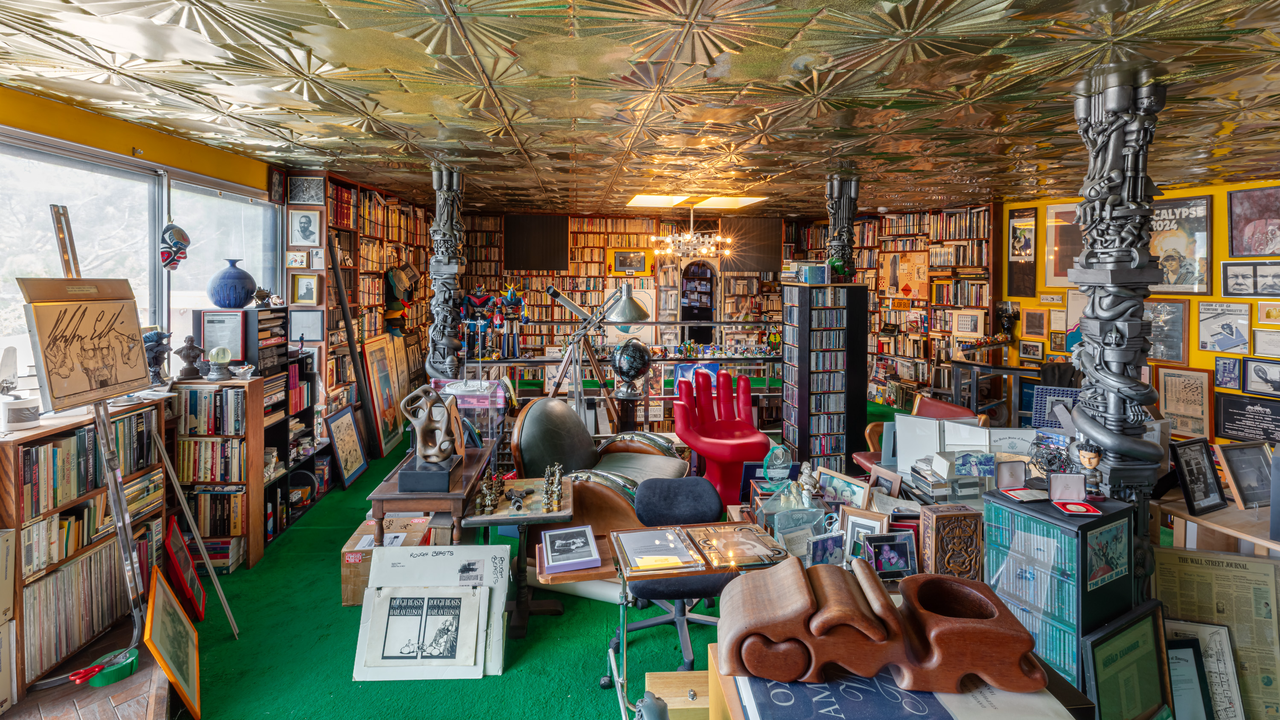
Image courtesy: Barry Schwartz, Ellison Wonderland, Office.
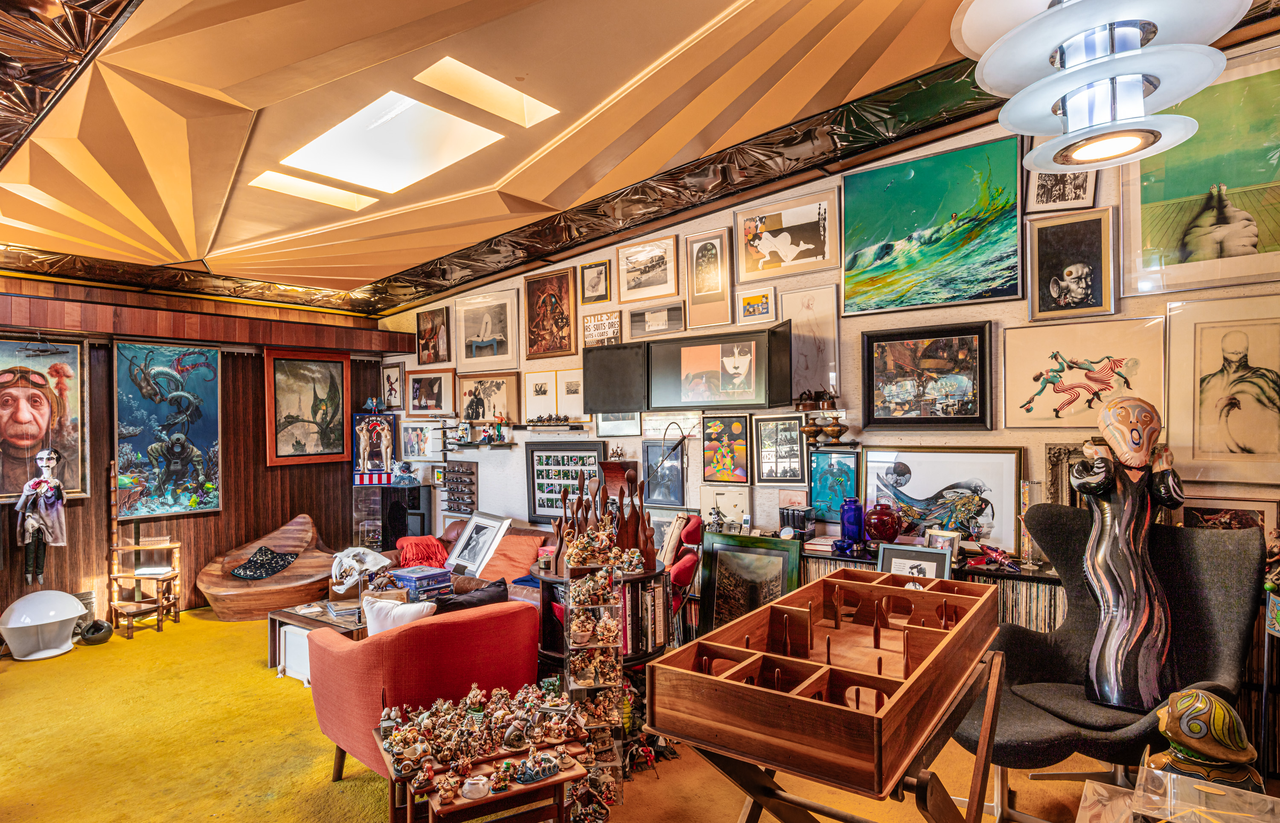
Image courtesy: Barry Schwartz, Ellison Wonderland, Living Room.
Challenge Scope:
"So much minute detail that it was not easy to capture all of it very well."
Technical Approach:
Results & Insights:
"Just because the visual information is so dense... seeing it all on still photos doesn't give you the feeling that you get when actually inhabiting the space"
Lessons Learned:
Schaefer's hands-on experience revealed key practical benefits that distinguish this approach from traditional methods. The accessible form factor proved crucial—he could operate the device for extended periods without fatigue or specialized training. Real-time feedback during capture ensured comprehensive coverage, while the direct workflow integration with Jetset demonstrated immediate practical value.
The 2cm precision accuracy met production measurement requirements, but Schaefer sees even greater potential ahead. "I think that integrating a truly accurate camera simulator in the program would be fantastic," he explains. "Then we could navigate the space and set up camera angles, frames and all to really pre-vis the shots in one place." This integration would consolidate location scouting, shot planning, and previsualization into a single workflow.
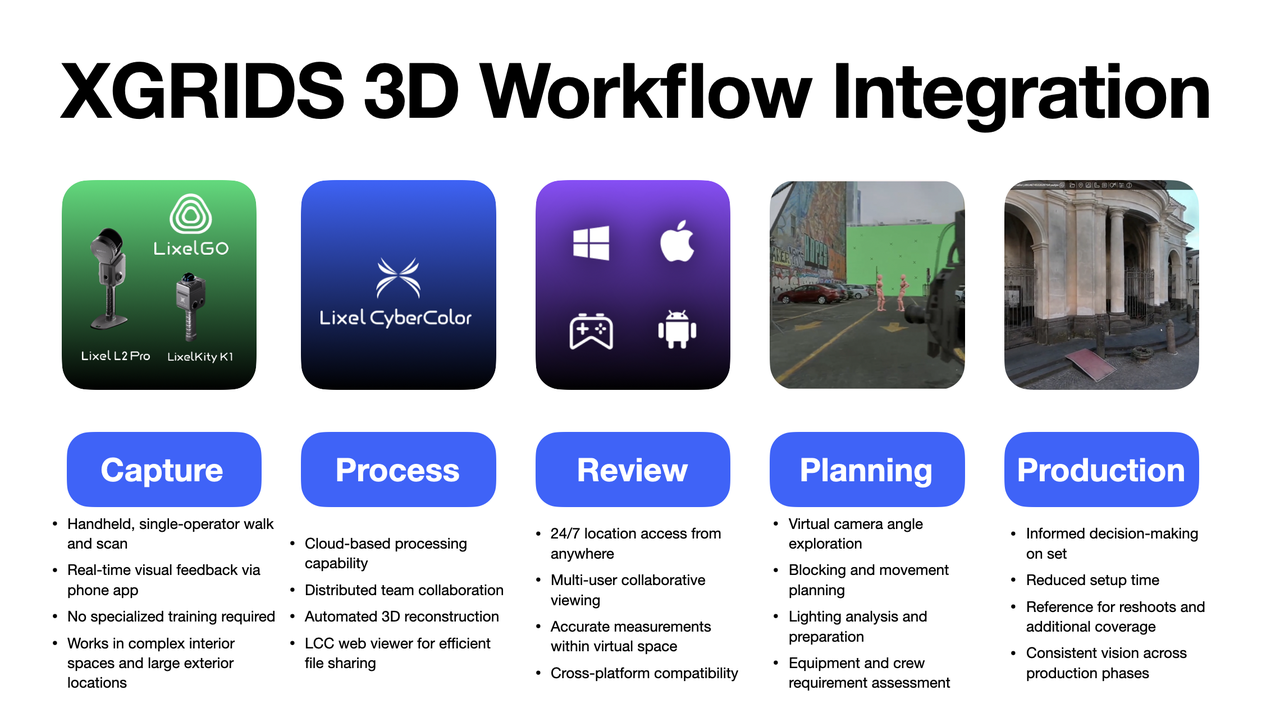
The film industry's awareness of 3D Gaussian Splatting remains limited despite its potential. "There's a lot of education that needs to be given to the movie and television business people because they don't understand that you could create using the Gaussian splats... what you can put on that wall," Schaefer observes. While virtual production LED walls have gained acceptance, few understand how reality capture can enhance these workflows.
Schaefer envisions a fundamental shift in how creative teams work together. "The splats give us, the filmmaking team (director, DP, production and costume designers, AD, UPM) the ability to virtually visit and revisit locations," he explains. The precision matters too: "With the great accuracy of the splats and the ability to make accurate measurements... we can return many times to any location without leaving the production office."
The technology's future lies in seamless workflow integration. Schaefer specifically sees potential for game controller navigation to make virtual scouting more intuitive, camera simulation within the LCC viewer for precise shot planning, and integration with established tools like the Artemis viewfinder app that cinematographers already use daily.
Roberto Schaefer's experience validates 3D Gaussian Splatting as a practical solution for cinematography challenges beyond typical virtual production applications. His projects demonstrate clear value in location scouting, team collaboration, and cultural documentation.
"The gaussian splats opened a new idea to me of how to communicate with the entire production team on a movie in a convenient and rapid way but keeping accuracy and the reality of the space easily reachable," Schaefer reflects. This communication breakthrough extends across the entire production lifecycle: "That would go for initial scouting, pre-production, construction of sets and eventually pre-vis the shoot as well as have a complete usable file for any kind of reshoot or additional setups that needed to be done after principal photography or the sets were dismantled or unavailable."
Key Insights:
Industry Opportunity: The combination of technical accuracy, intuitive operation, and collaborative capabilities positions 3DGS as an enabling technology for established professionals seeking practical solutions to persistent production challenges.
As Schaefer concludes: "Eventually we always want to be in the real space when filming, but this could speed up and help stimulate the creative process."
This case study is based on interviews and field testing conducted by Roberto Schaefer, ASC, AIC, between 2024-2025, documenting early adoption of XGRIDS 3D Gaussian Splatting technology in professional cinematography applications.
Reality capture let Netflix's Monster scout 35 Italian locations in four days with PortalCam, then plan shots remotely through virtual scouting of 3DGS scans.
.png?x-oss-process=image/resize,w_800/quality,Q_50)
A one-hour Lixel K1 scan of six Culver City blocks gave a generative film pipeline the fixed geometry it needed to keep six locations consistent.
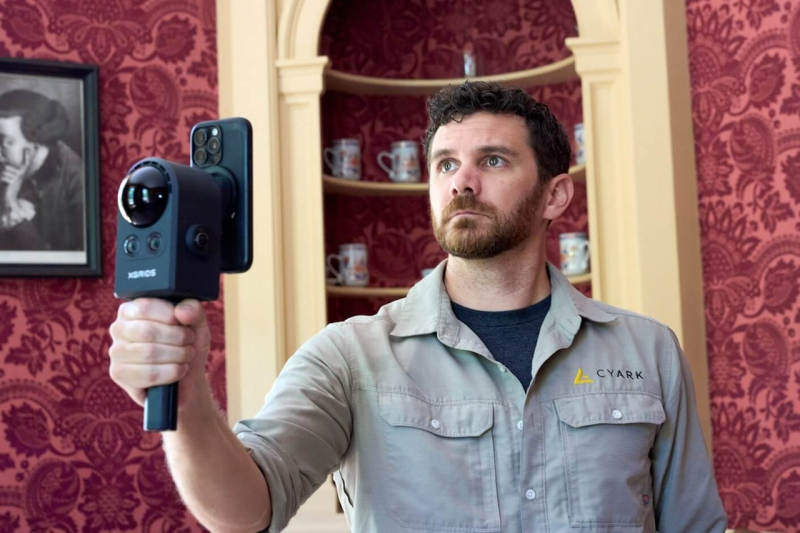
Handheld 3DGS by PortalCam helped CyArk document three landmark interiors for America 250, solving mirror reflections and low-light field challenges.
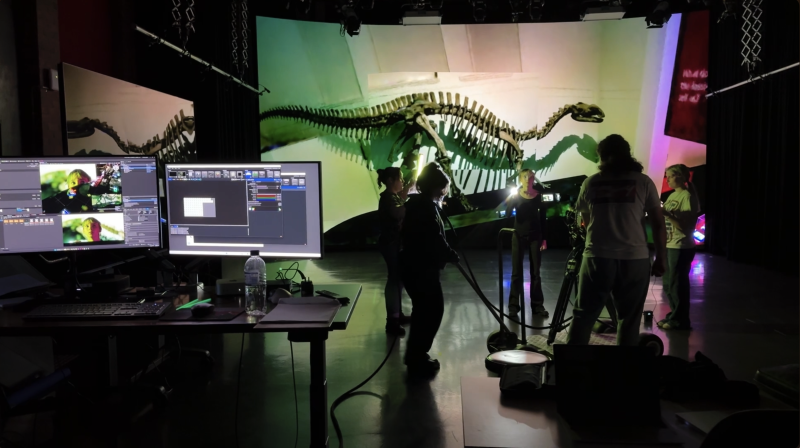
Handheld 3D capture brings real museum spaces to LED volumes, replacing green screens and photogrammetry for fast, cinematic virtual camera moves.