Case Studies
Virtual Pre-Production for Netflix's Monster: The Lizzie Borden Story.
Reality capture let Netflix's Monster scout 35 Italian locations in four days with PortalCam, then plan shots remotely through virtual scouting of 3DGS scans.
Handheld 3DGS by PortalCam helped CyArk document three landmark interiors for America 250, solving mirror reflections and low-light field challenges.
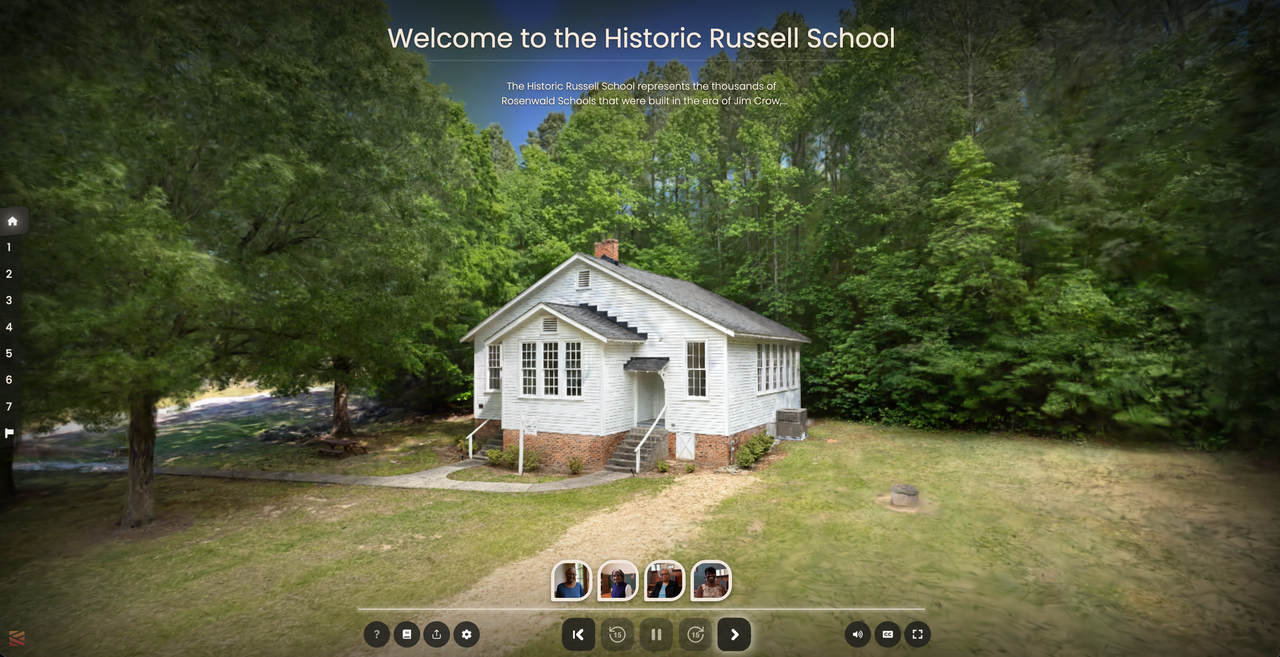
A two-room schoolhouse in North Carolina, built in 1926, with windows sized for a building that had no electricity. A colonial house in Williamsburg holding glass scientific instruments and mirrors. A bar two blocks from where the Twin Towers stood, its walls and ceiling carrying more than 7,000 patches left by firefighters, police officers, and first responders from around the world.
For the United States' 250th anniversary, CyArk chose three places where the story lives inside the building. The nonprofit has documented cultural heritage sites in 3D for two decades and publishes them free on its Tapestry platform. Its 3D capture workflow was built around aerial capture for exterior context on the building level, and photogrammetry plus LiDAR, which required extensive planning, capture, and processing to recreate the interiors. For this project, CyArk chose to work with PortalCam instead.
The PortalCam advantage in these particular buildings was continuous capture. The team could walk a room and collect enough detail to build an engaging interactive experience for virtual visitors, inside a reasonable time window, without reconstructing the space from photographs or closing off sections of it to work.
Reflective, transparent, visually dense surfaces are the classic failure conditions for conventional photogrammetry. All three sites are full of them, and in each case the difficult material is the same material that carries the meaning.
The George Wythe House has mirrors and glass instruments.
.PNG)
O'Hara's, the hardest of the three, has mirrored walls, glassware, and decades of accumulated photographs and mementos on every available surface.
.PNG)
.PNG)
"The character of the room comes from that density of reflections, objects and visual detail. With our earlier workflows, we would either have struggled to reconstruct those elements or had to simplify the space." — Christopher Millbern, CyArk
For the interiors, 3D Gaussian splatting (3DGS) replaced conventional photogrammetry outright. CyArk was documenting for storytelling and visual preservation rather than conservation planning, engineering, or dimensional analysis, and for that purpose the splat record delivered the visual quality without the time and processing cost of building a detailed geometric model. Aerial capture kept its existing job on the exteriors, supplying the wider site context the interior scenes sit inside.
CyArk describes handheld splat capture as closer to dressing and lighting a film set than to traditional photogrammetry, and the field routine reflects it. Lighting, staging, and the camera path shape the result, so before anything is scanned the team accounts for temporary objects, open doors, reflections, people moving through the space, and the exact route the operator will walk.
One operator from the two-person team runs PortalCam. The other prepares the next room, adjusts lighting and staging, manages batteries and equipment, and handles access or crowd control when the site is still open to the public. CyArk notes that the second role is crucial: room preparation and uninterrupted runs affect the final quality as much as the scanning does. Each room or defined area gets at least two sessions, running 30 minutes to an hour and fifteen depending on size and complexity.
Lighting makes or breaks a capture. The hardest spaces are those without strong natural light or working electric light, and once imagery is too dark, no camera technique or processing step recovers what was lost. It has to be fixed in the room. CyArk now carries several types of portable lighting, aiming for balanced, natural-looking illumination that holds the atmosphere of a historic interior while giving the camera enough to work with. Short test scans come first, exposing dark corners, reflections, and abrupt lighting transitions before anyone commits to a full room.
Scope is the other judgment call. A capture needs enough surrounding context for the space to feel whole, but pushing too far past the main area adds data that lowers the quality of the room the capture is actually about.
| Stage | Tool | Output |
| Capture | PortalCam | Raw interior capture |
| Processing and LOD generation | LCC Studio | Gaussian splat scene, multiple levels of detail |
| Conversion | splat-transform | PlayCanvas streaming format |
| Delivery | PlayCanvas Engine, in Tapestry | Progressive LOD streaming in the browser |
Interiors and exteriors were kept as separate optimized scenes and joined inside Tapestry through the visitor journey rather than merged into one enormous dataset. Each environment kept the capture and processing method suited to it: the aerial model sets the site, the PortalCam scenes carry the interior fidelity, and transitions and navigation points stitch them into one continuous experience.
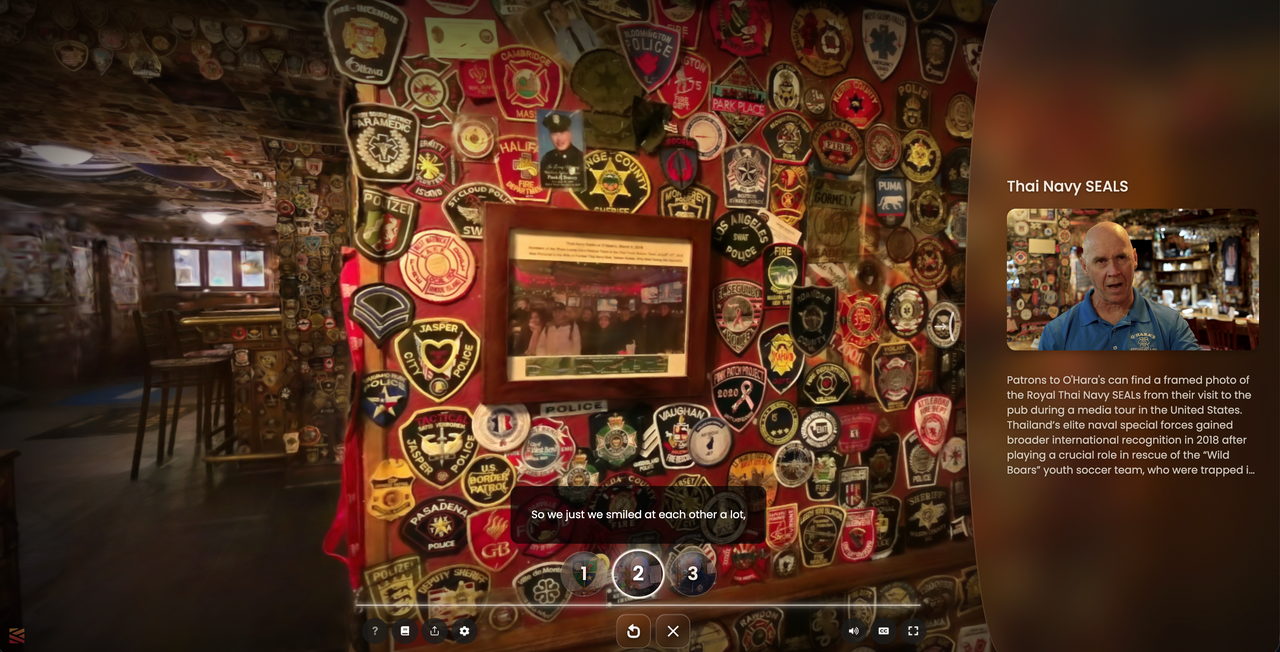
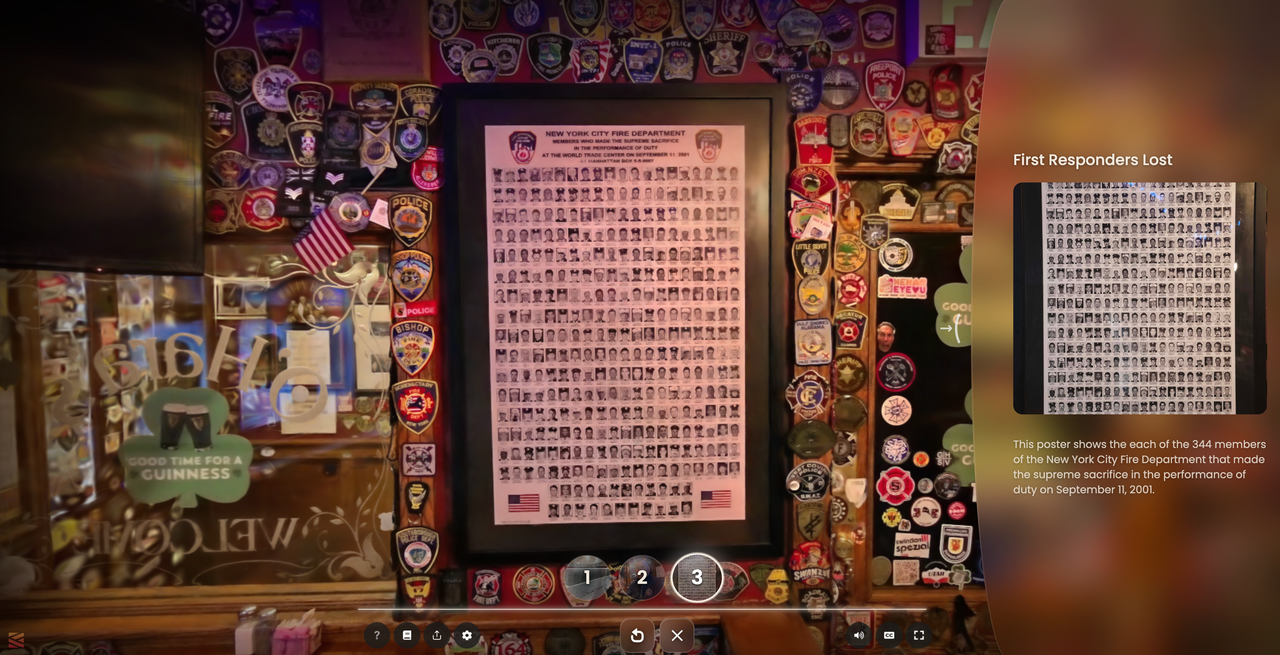
Scenes this dense reach a browser through level-of-detail streaming. Rather than loading everything at full resolution, the player pulls the appropriate level of detail for the visitor's position and device. A desktop holds more splats at once; a phone or a standalone headset gets a lighter version of the same scene. One scene serves every device, which also means CyArk can put these experiences in a headset without building a separate product for it.
CyArk's earlier Tapestry experiences were strongest at the scale of a building or a landscape. In the America 250 collection, visitors can get close to individual photographs, maps, objects, and furniture, which is where most of these stories actually live. At O'Hara's, the patches, memorial objects, flags, and everyday clutter become the soul of the space, and a simplified geometric model would have flattened all of it. The room now works as evidence inside the interpretation instead of scenery behind the narration.
That also lets CyArk pin interpretation to exact locations. A visitor hears a story, looks directly at the object it concerns, and keeps going.
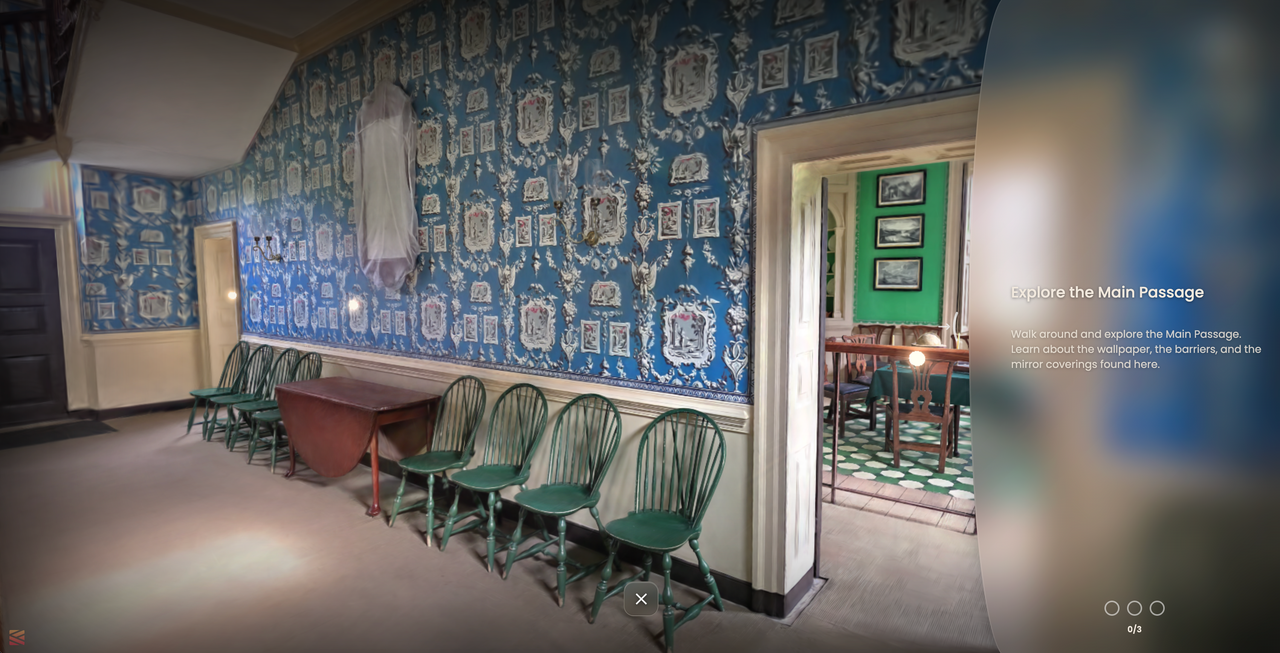
Beyond general web visitors, the experiences are in use with teachers and students, site interpreters, museums, researchers, and heritage organizations, for classroom work, preparation before an in-person visit, and access for people who cannot travel to Williamsburg, Hillsborough, or Lower Manhattan at all.
Alongside the interpretation, each scene holds a detailed visual record of a place at a particular moment in time. The Russell School is one of the last remaining Rosenwald schools. O'Hara's walls accumulate more patches every year. Both are now recorded with that accumulated detail intact.
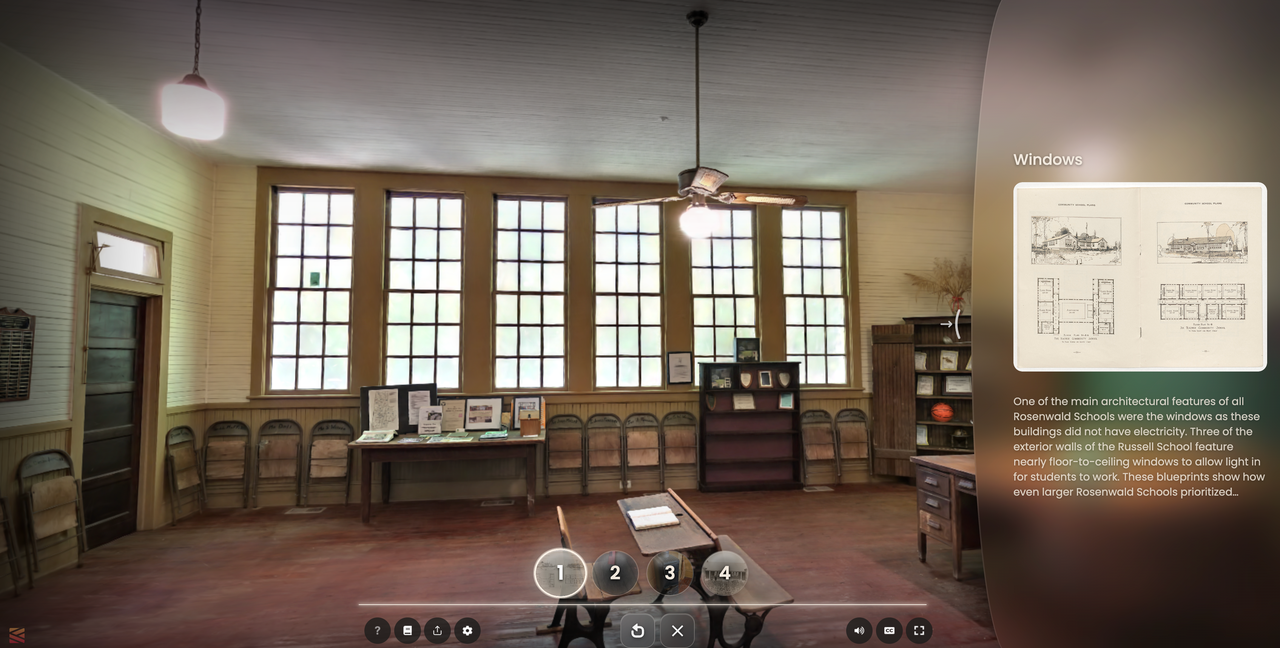
Early response since the June launch points to visitors treating the environments as places to explore. CyArk sees it most in the George Wythe experience, where average engagement time for users is particularly high. Site partners have responded to the fact that the spaces keep their own character rather than reading as tidy rendered models.
CyArk estimates PortalCam cut both field capture and processing time by more than half, most notably in the complex interiors. Conventional photogrammetry there would have meant extensive image planning, many more individual photographs, and a longer reconstruction and cleanup pass. Instead, the team captured each room in continuous runs with PortalCam and reviewed results far sooner.
For working heritage sites, the field-time saving matters more than the processing one. Plenty of sites cannot close a room or hold back visitors for as long as a conventional interior photogrammetry workflow demands, and that constraint has quietly decided what gets documented and what does not.
Having access to PortalCam and the supporting XGRIDS workflow enables the CyArk team to explore spatial experience candidates in two directions: spaces with heavy reflections, transparent objects, dense collections, or foliage are now workable where they would previously have been ruled out or heavily simplified. And the shorter capture window brings in a category that may not be difficult for 3D reconstruction, spaces that would be logistically and operationally challenging: active museums, visitor attractions, restaurants, places of worship, anywhere the access window is narrow.
Asked what the team would do differently next time, CyArk cited planning the visitor journey earlier. Knowing where visitors will move, what they will look at, and which views carry the most weight determines where the capture hours should go. That, and a portable lighting kit on every job, with short test scans before committing to a room.
| When | Practice | Why |
| Before you go | Plan the visitor journey first | Where people will move and what they will look at decides where the capture hours go |
| Before you go | Pack a flexible portable lighting kit | The hardest rooms are the ones without strong natural or working electric light |
| On arrival | Run short test scans | Finds dark corners, reflections, and abrupt lighting transitions before the access window is spent |
| Before each room | Fix the lighting in the room | Dark imagery cannot be recovered in processing. Aim for balanced, natural-looking light that holds the room's atmosphere |
| During capture | Send two people | One scans; one preps the next room, manages lighting and equipment, and handles public access |
| During capture | Define the scope, then hold it | Enough surrounding context for the space to feel whole. Past that, extra data may not add to the quality of the room you came for Explore the America 250 collection below: |
Reality capture let Netflix's Monster scout 35 Italian locations in four days with PortalCam, then plan shots remotely through virtual scouting of 3DGS scans.
.png?x-oss-process=image/resize,w_800/quality,Q_50)
A one-hour Lixel K1 scan of six Culver City blocks gave a generative film pipeline the fixed geometry it needed to keep six locations consistent.
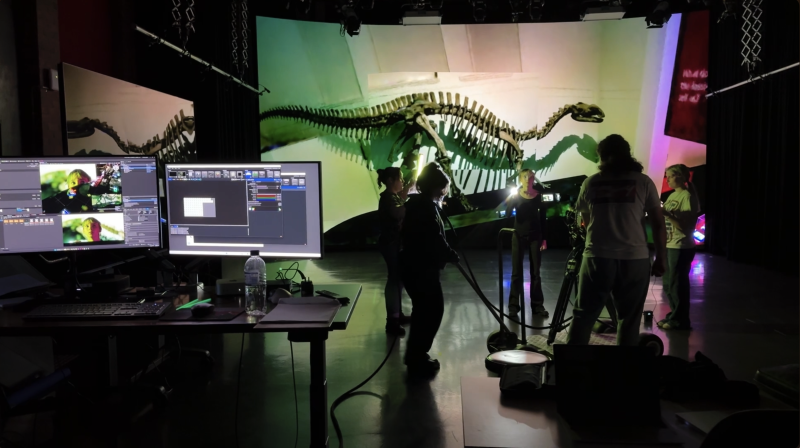
Handheld 3D capture brings real museum spaces to LED volumes, replacing green screens and photogrammetry for fast, cinematic virtual camera moves.
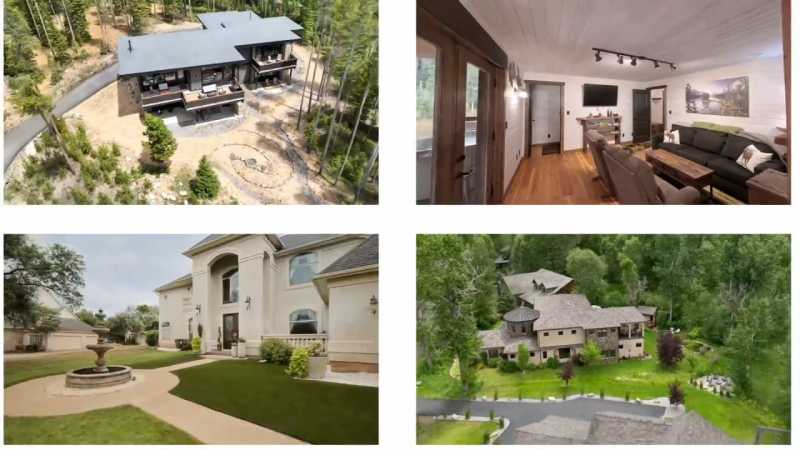
Cut property capture costs by up to 90% using 3D Gaussian splatting to deliver photorealistic browser-based spatial tours for real estate and hospitality.