
Case Studies
Virtual Pre-Production for Netflix's Monster: The Lizzie Borden Story.
Reality capture let Netflix's Monster scout 35 Italian locations in four days with PortalCam, then plan shots remotely through virtual scouting of 3DGS scans.
Explore how the Lixel handheld mobile scanning solution revolutionizes heap measurement for lithium mica piles, providing unmatched efficiency, precis
Explore how the Lixel handheld mobile scanning solution revolutionizes heap measurement for lithium mica piles, providing unmatched efficiency, precision, and cost-effectiveness for industrial applications.
Today, as lithium resources increasingly become the core material in the field of new energy, lithium mica, as an important lithium mineral raw material, has attracted much attention for its mining and utilization. However, in the actual operation of lithium industry plants, how to efficiently and accurately measure the volume of lithium mica piles has always been a difficult problem for the industry. Today, we will explore with you how handheld SLAM technology can bring revolutionary changes to the measurement of lithium mica piles.
Client Name and Industry
The project was implemented at a lithium factory in China, specializing in producing battery-grade lithium carbonate. This factory has established a fully integrated production chain encompassing mining, beneficiation, lithium salt preparation, and recycling, with an annual output of 20,000 tons of battery-grade lithium carbonate
Challenges and Problems
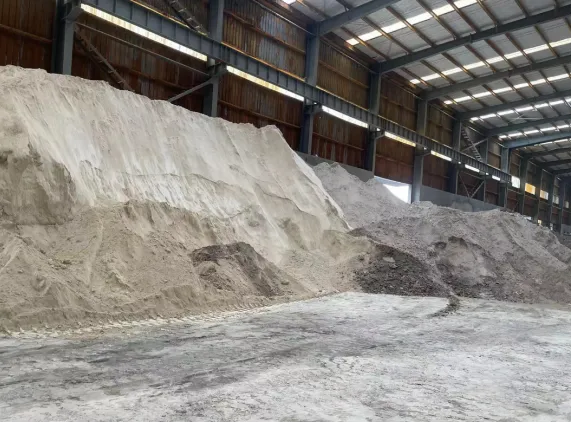
Traditional methods for measuring lithium mica piles relied on tools like total stations or GPS/RTK. These approaches were labor-intensive, time-consuming, and prone to errors caused by human factors and calculation limitations. This lack of accuracy increased costs and affected production planning.
Technology and Products Used
The factory adopted the Lixel handheld mobile scanning solution. This highly integrated device combines LiDAR, panoramic cameras, and high-precision IMU with real-time modeling capabilities. The solution also included TRW professional point cloud processing software.
Its LiDAR + vision Multi-SLAM solution eliminates the limitations of tripod and fixed position scanning, achieving an efficient operation mode of scanning while walking. The scanning speed is 320,000 points/s, and the data is real-time postback and previewed, ensuring fast and accurate volume calculation. The single scan time can reach 90 minutes, fully meeting the requirements of data integrity and accuracy in complex scenarios.
Implementation Process
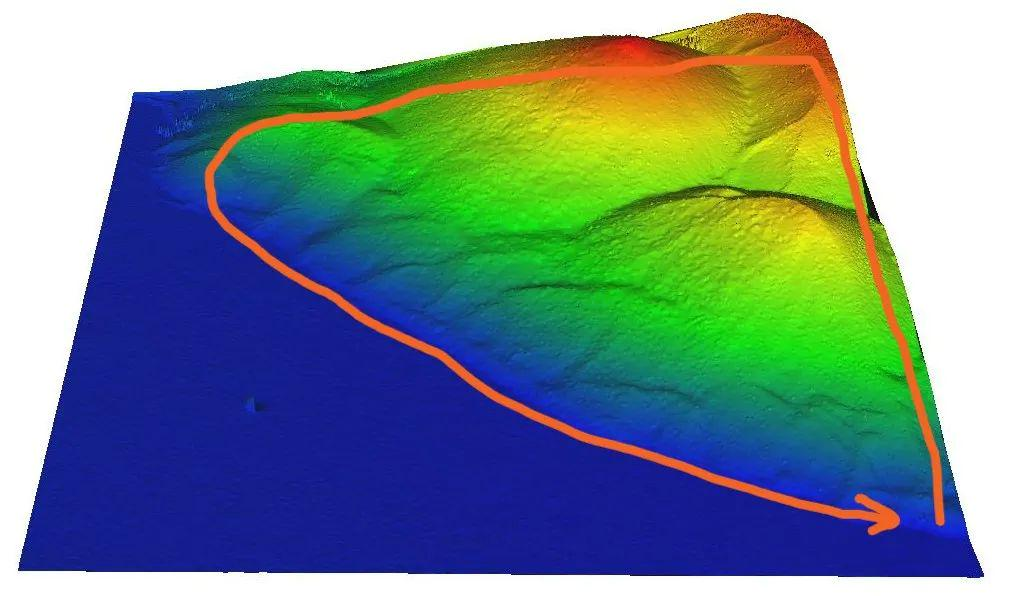
After assessing the site, the team designed a scanning path to fully cover the lithium mica piles while avoiding missed scans.
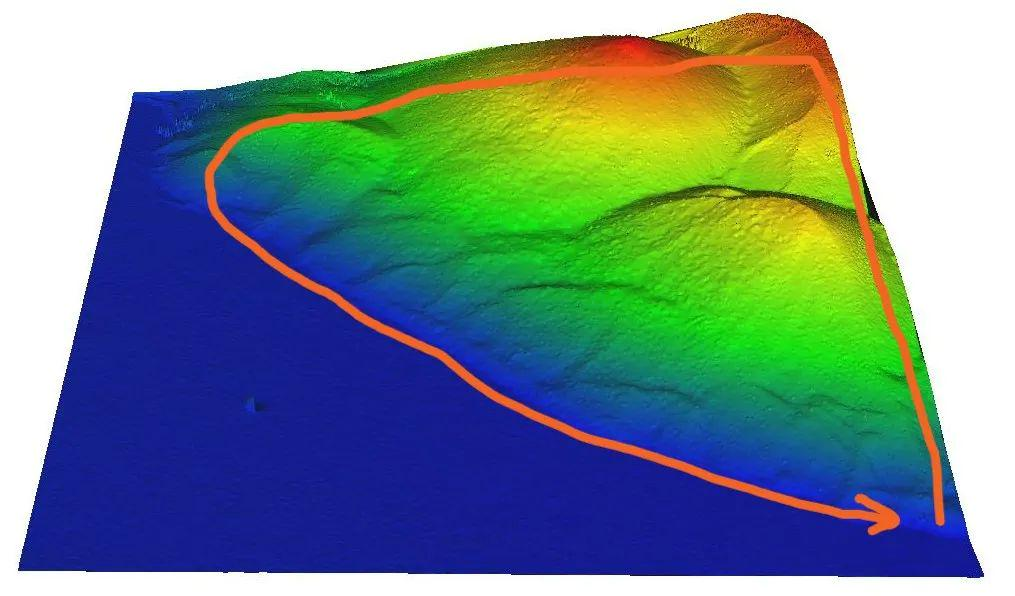
2. Data Collection: Technicians used the Lixel L1 scanner with an extension rod to capture data while moving around the piles. Real-time previews on mobile devices allowed for instant adjustments, reducing rework and increasing efficiency.
Using the Lixel L2 Pro handheld scanner with an extension pole to scan around the pile (it is recommended to work alone to reduce the shadow noise in the point cloud). There is no need to pause for stations or perform point cloud splicing and calibration throughout the entire operation process. Surveyors can view the scanning path, point cloud effect, and mis-scanning and omission situations in real time through their mobile phones, effectively avoiding the inconvenience and cost increase caused by multiple replenishments.
One person can operate, reducing shadows and noise point
3. Post-Processing:
Data was processed using LixelStudio software to refine point clouds and segment individual piles. And the software calculates the fill and excavation volumes automatically. Visualized data was compiled into comprehensive reports.
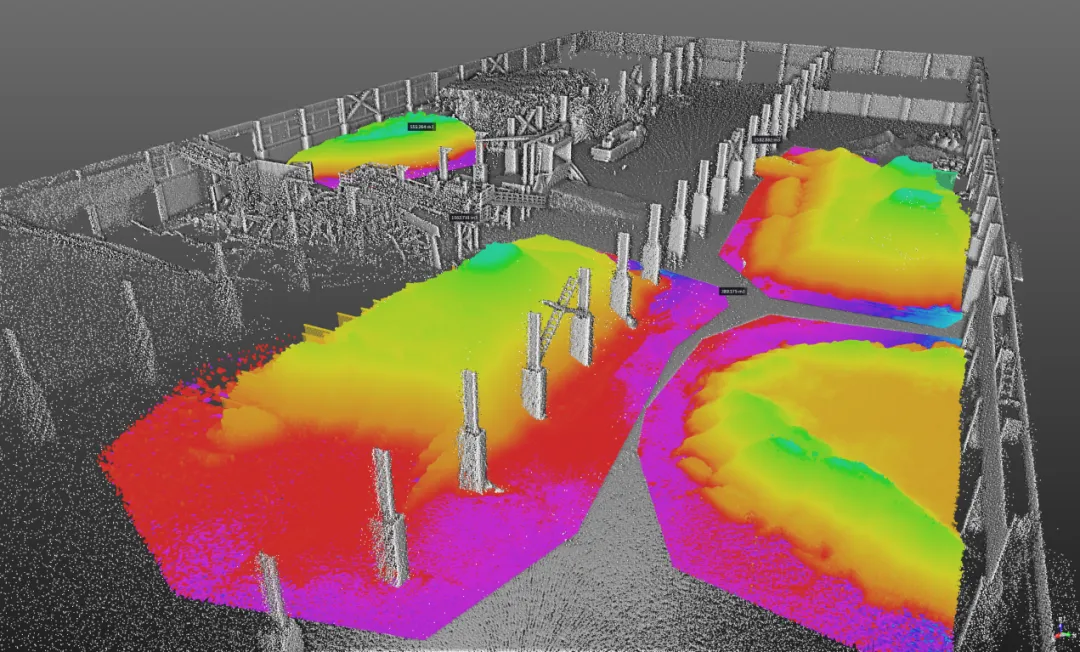
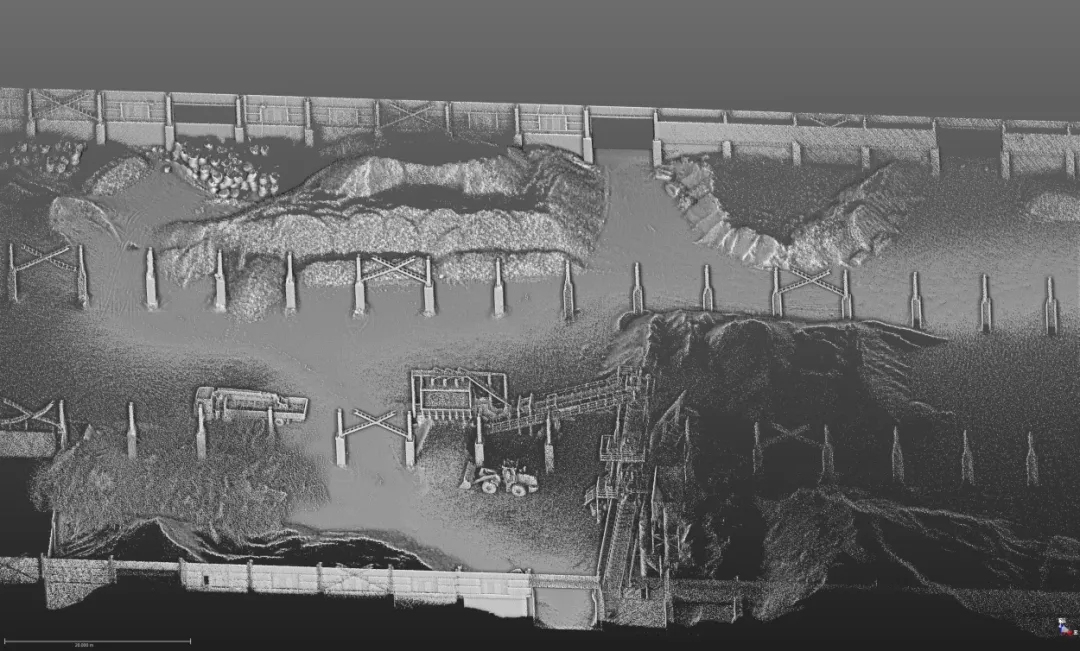
Lithium plant integral las point cloud model
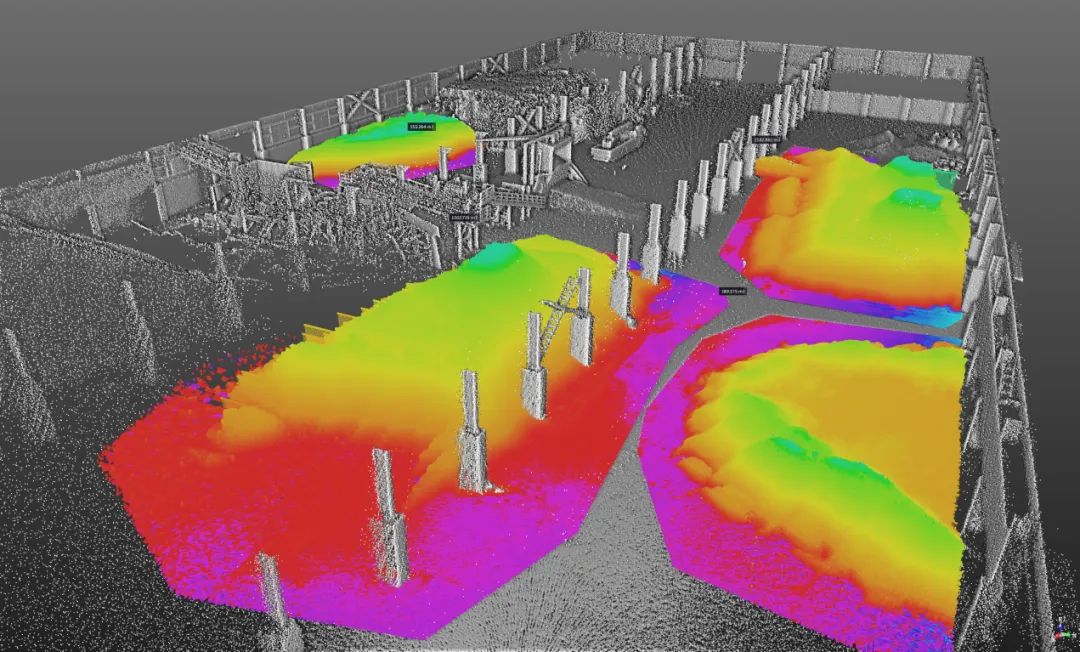
Preview of the volume of each pile of lithium mica
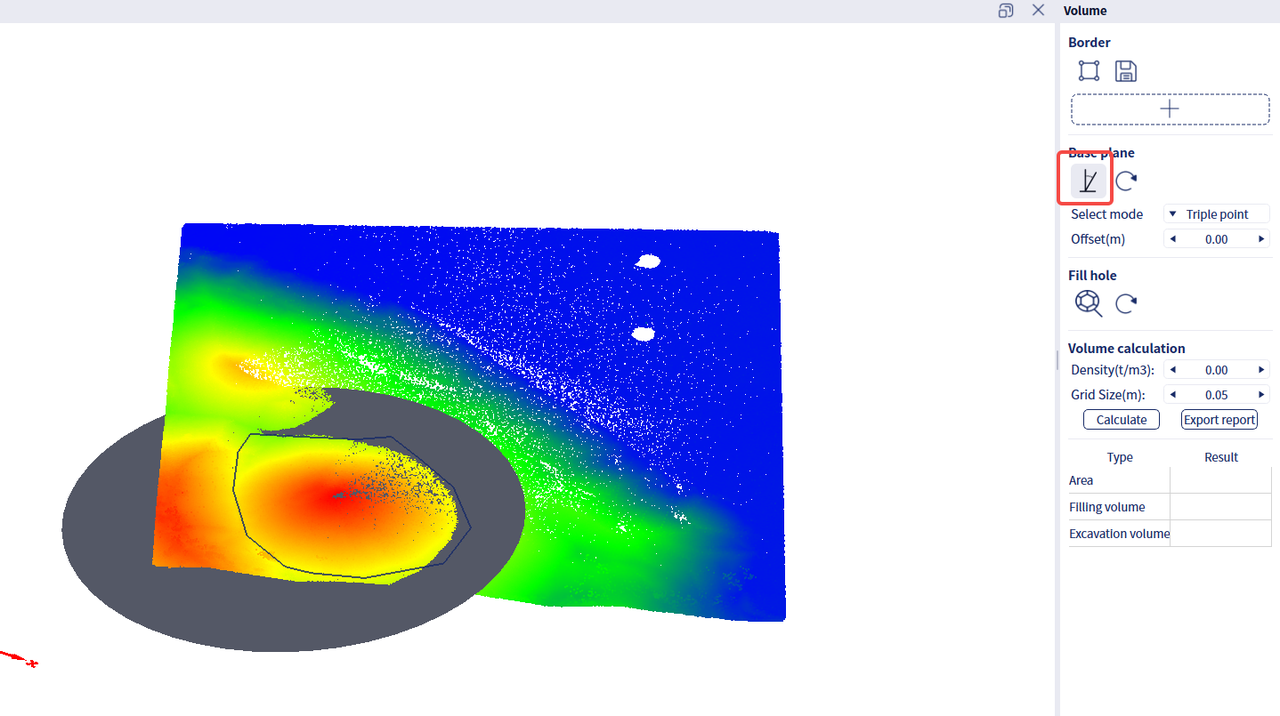
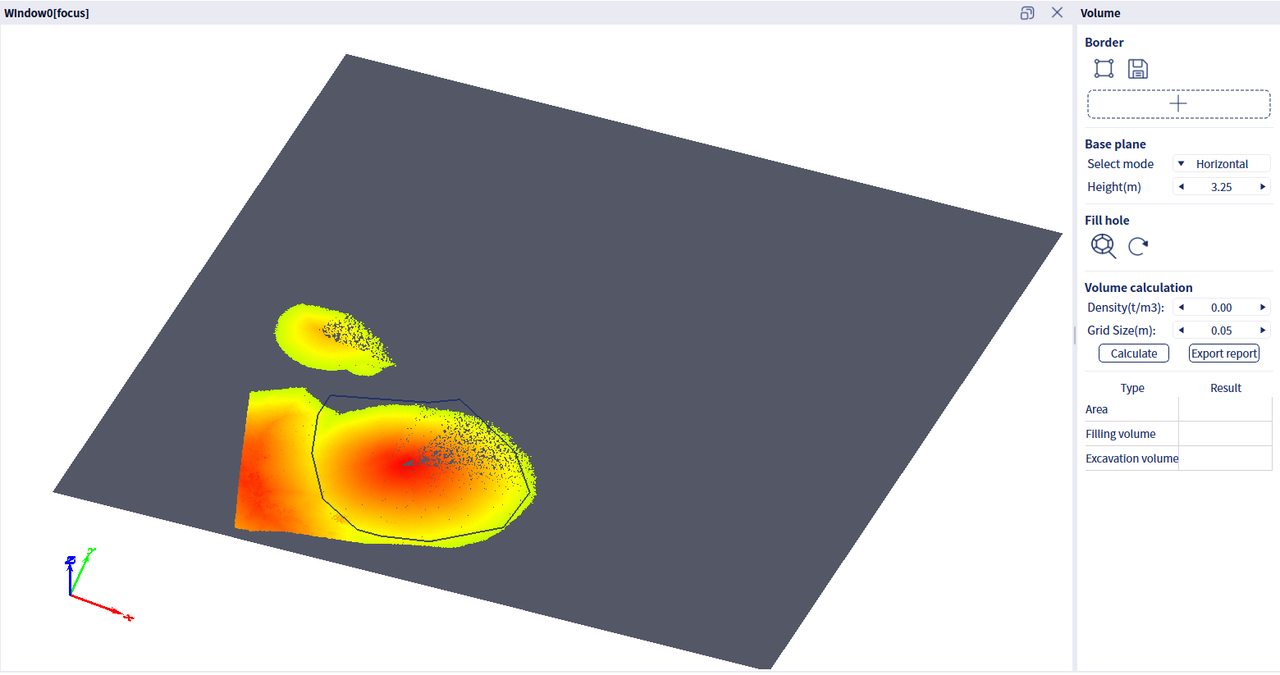
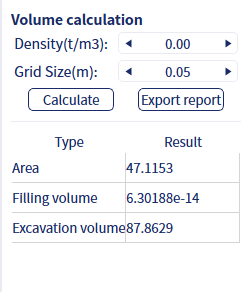
Fill hole automatically, calculate the volume
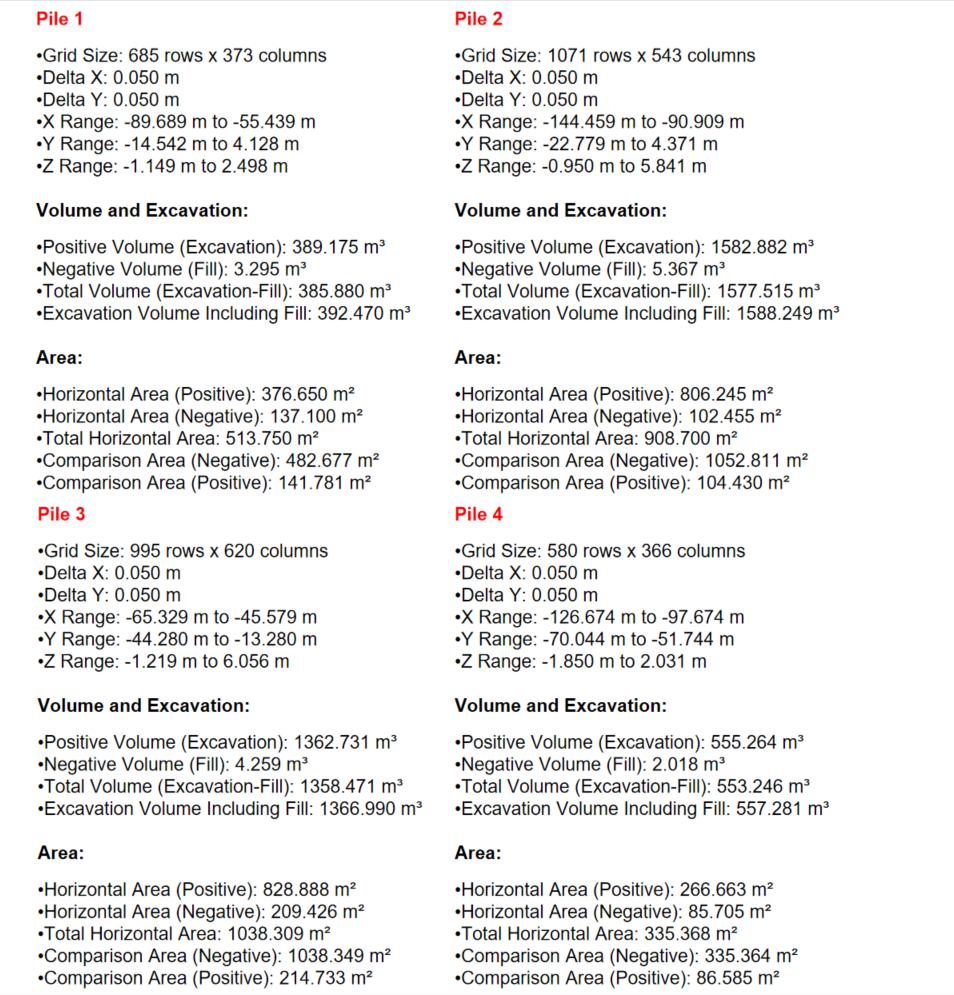
Stockpile measurement report
| Metric | Pile 1 | Pile 2 | Pile 3 | Pile 4 |
| Grid Size | 685 rows x 373 columns | 1071 rows x 543 columns | 995 rows x 620 columns | 580 rows x 366 columns |
| Delta X | 0.050 m | 0.050 m | 0.050 m | 0.050 m |
| Delta Y | 0.050 m | 0.050 m | 0.050 m | 0.050 m |
| X Range | -89.689 m to -55.439 m | -144.459 m to -90.909 m | -65.329 m to -45.579 m | -126.674 m to -97.674 m |
| Y Range | -14.542 m to 4.128 m | -22.779 m to 4.371 m | -44.280 m to -13.280 m | -70.044 m to -51.744 m |
| Z Range | -1.149 m to 2.498 m | -0.950 m to 5.841 m | -1.219 m to 6.056 m | -1.850 m to 2.031 m |
| Volume and Excavation | ||||
| Positive Volume (Excavation) | 389.175 m³ | 1582.882 m³ | 1362.731 m³ | 555.264 m³ |
| Negative Volume (Fill) | 3.295 m³ | 5.367 m³ | 4.259 m³ | 2.018 m³ |
| Total Volume (Excavation-Fill) | 385.880 m³ | 1577.515 m³ | 1358.471 m³ | 553.246 m³ |
| Excavation Volume Including Fill | 392.470 m³ | 1588.249 m³ | 1366.990 m³ | 557.281 m³ |
| Area | ||||
| Horizontal Area (Positive) | 376.650 m² | 806.245 m² | 828.888 m² | 266.663 m² |
| Horizontal Area (Negative) | 137.100 m² | 102.455 m² | 209.426 m² | 85.705 m² |
| Total Horizontal Area | 513.750 m² | 908.700 m² | 1038.309 m² | 335.368 m² |
| Comparison Area (Negative) | 482.677 m² | 1052.811 m² | 1038.349 m² | 335.364 m² |
| Comparison Area (Positive) | 141.781 m² | 104.430 m² | 214.733 m² | 86.585 m² |
“The Lixel mobile scanning system has transformed our stockpile measurement process, providing precise, efficient, and easy-to-use technology that significantly enhances our operational capabilities.” — Project Manager, Lithium Factory
Reality capture let Netflix's Monster scout 35 Italian locations in four days with PortalCam, then plan shots remotely through virtual scouting of 3DGS scans.
.png?x-oss-process=image/resize,w_800/quality,Q_50)
A one-hour Lixel K1 scan of six Culver City blocks gave a generative film pipeline the fixed geometry it needed to keep six locations consistent.
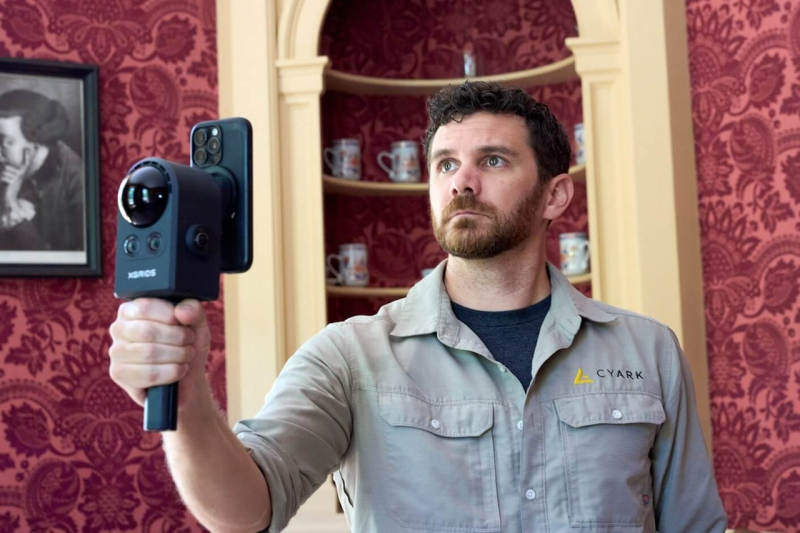
Handheld 3DGS by PortalCam helped CyArk document three landmark interiors for America 250, solving mirror reflections and low-light field challenges.
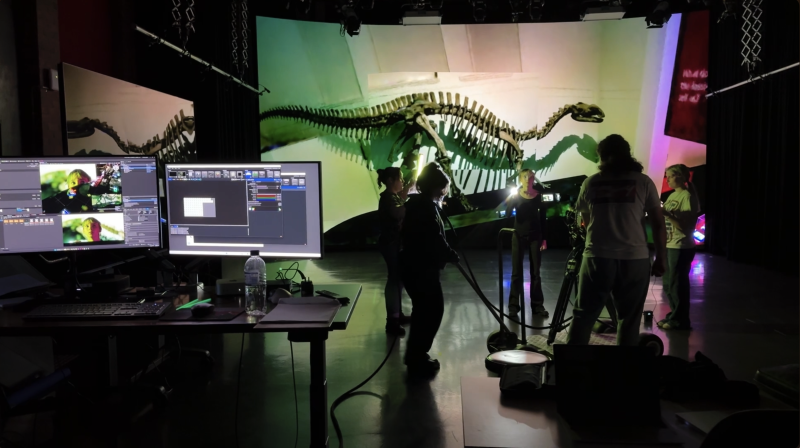
Handheld 3D capture brings real museum spaces to LED volumes, replacing green screens and photogrammetry for fast, cinematic virtual camera moves.